

TSC2007IPWR 12-Bit Resistive Touch Screen Controller: Design, I2C & Applications
A practical engineering guide to the Texas Instruments TSC2007IPWR, covering 4-wire resistive touch sensing, 8-bit and 12-bit conversion, I2C communication, PENIRQ operation, touch-pressure measurement, low-power design, TSSOP-16 packaging, PCB layout and system integration.
What Is TSC2007IPWR?
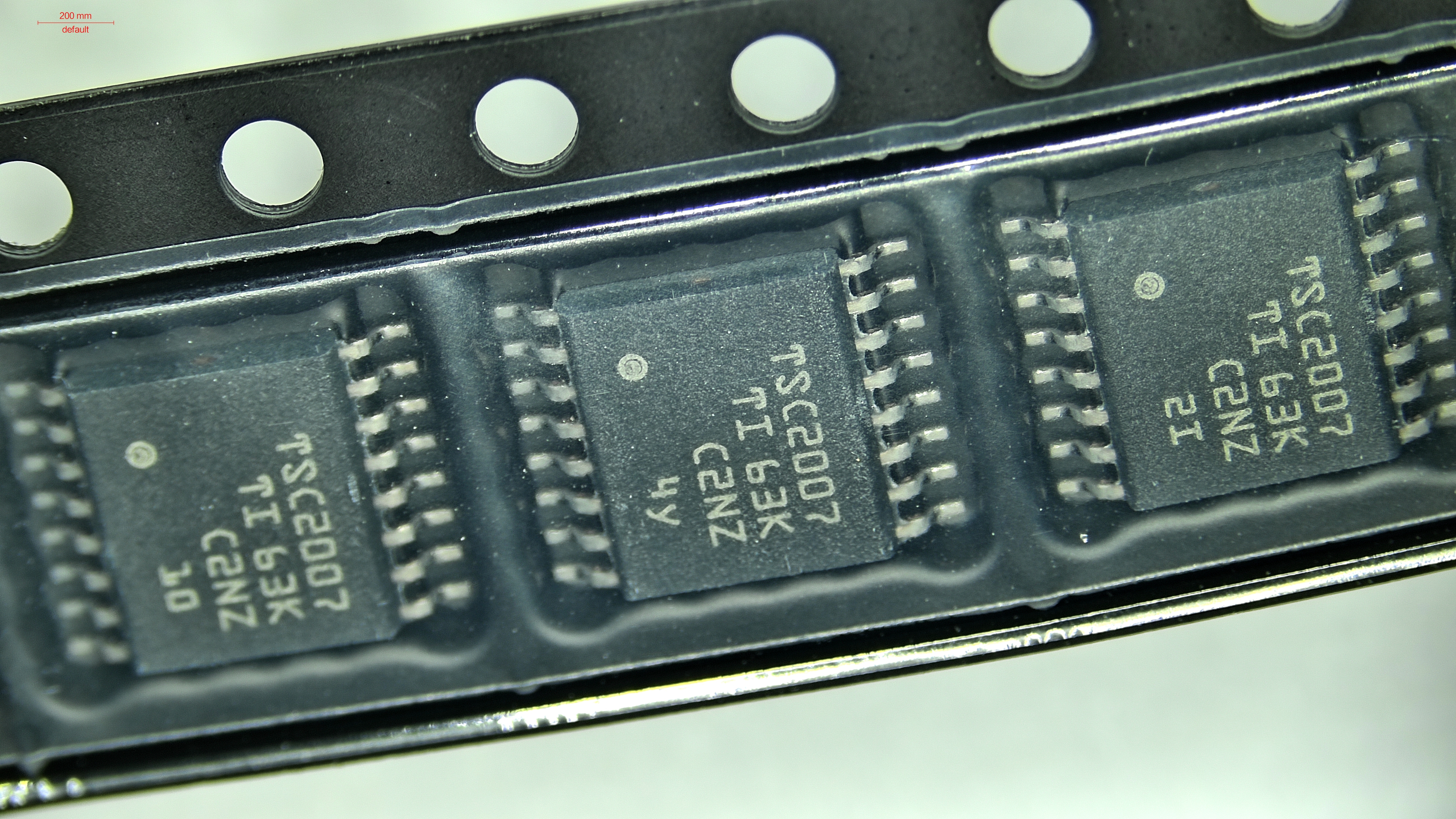
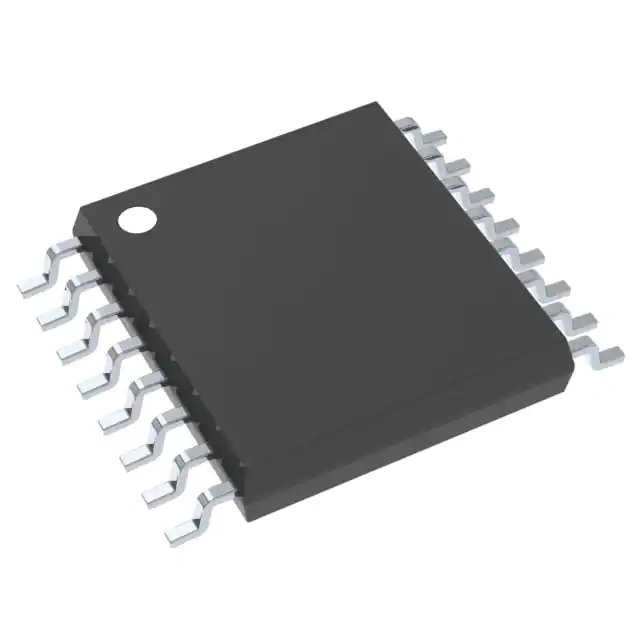
TSC2007IPWR is a low-power 4-wire resistive touch-screen controller from Texas Instruments. It contains the analog switches, drivers, control logic and analog-to-digital conversion functions required to measure X and Y touch position as well as touch pressure. It communicates with a processor through an I2C interface, supports 8-bit and 12-bit conversion modes, operates from a single 1.2 V to 3.6 V supply, and provides a PENIRQ output for efficient touch detection. The IPWR ordering version uses a 16-pin TSSOP package supplied on tape and reel.
TSC2007IPWR Key Specifications
The TSC2007IPWR touch screen controller is designed for systems that use a traditional 4-wire resistive touch panel. Unlike a capacitive touch controller, it does not attempt to sense changes in electric fields around a finger. Instead, it measures electrical voltages created when two resistive layers inside the touch panel make contact.
This architecture remains useful in industrial equipment, handheld instruments and products where operation with a stylus, glove or simple pressure input is more important than advanced multi-touch gestures.
| Parameter | TSC2007IPWR | Engineering Meaning |
|---|---|---|
| Manufacturer | Texas Instruments | Precision analog and embedded semiconductor manufacturer |
| Product Family | TSC2007 | Nanopower resistive touch screen controller |
| Touch Interface | 4-Wire Resistive | Designed for X+, X−, Y+ and Y− resistive panel connections |
| Conversion Resolution | 8-Bit or 12-Bit | Allows a trade-off between conversion speed and position resolution |
| Digital Interface | I2C | Uses two digital communication lines for processor control |
| Supply / Reference | 1.2 V to 3.6 V | Suitable for low-voltage processors and battery-powered products |
| 12-Bit Throughput | Up to 10 kHz | Supports responsive touch-position acquisition |
| 8-Bit Throughput | Up to 20 kHz | Provides faster sampling when lower resolution is acceptable |
| Pressure Measurement | Supported | Allows firmware to estimate how firmly the panel is pressed |
| Temperature Measurement | On-Chip | Provides additional internal measurement capability |
| Touch Interrupt | Buffered PENIRQ | Allows the processor to sleep until a touch event occurs |
| Power Management | Automatic Power-Down | Reduces current between conversions |
| Operating Temperature | -40°C to +85°C | Suitable for many commercial and industrial systems |
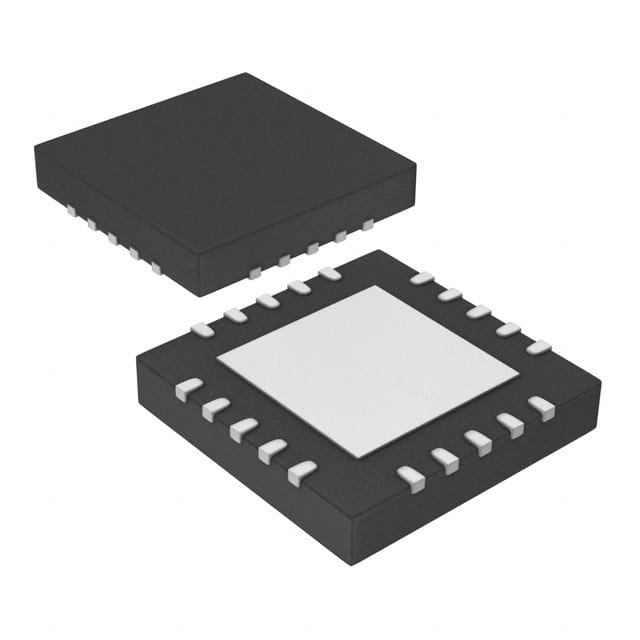
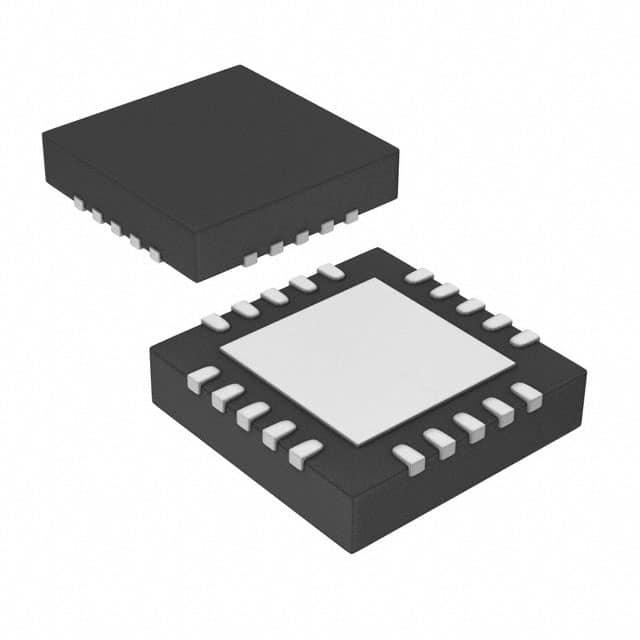
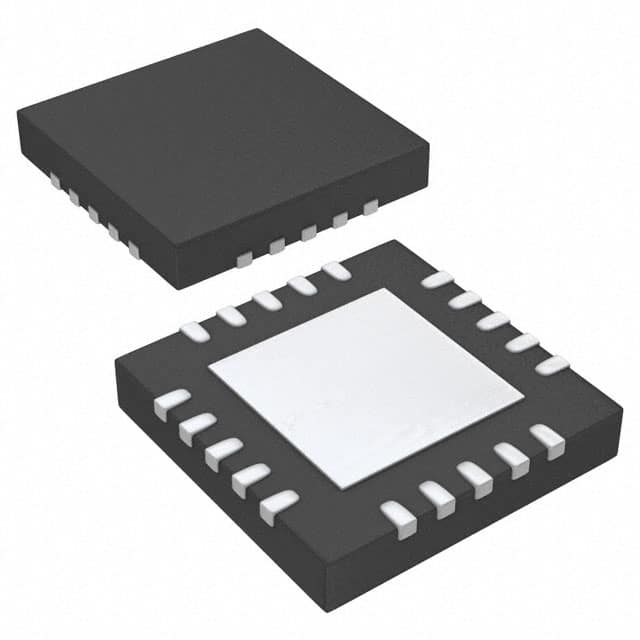
| Package | TSSOP-16 / PW | 16-pin surface-mount package |
| Packaging | Tape & Reel, 2000 pcs | IPWR ordering configuration for automated assembly |
The value of TSC2007IPWR is not simply its 12-bit ADC. Its useful advantage is that it combines touch-panel drive, coordinate conversion, pressure sensing, interrupt generation and low-power control into one dedicated interface IC.
How a 4-Wire Resistive Touch Screen Works
A 4-wire resistive touch panel contains two flexible resistive layers separated by a very small gap. One layer is associated with the horizontal axis and the other with the vertical axis.
When no pressure is applied, the two layers remain electrically separated. When a finger, glove or stylus presses the surface, the layers touch at that location.
TSC2007IPWR controls the panel electrodes and measures the resulting voltage to determine where the contact occurred.
The controller drives one axis of the touch panel and measures the voltage on the other axis to calculate horizontal position.
The drive and measurement arrangement is changed so the vertical position can be determined.
Additional measurements can be combined with panel resistance to estimate touch pressure.
The host processor therefore does not need to manually control a group of analog switches and ADC channels. It sends commands to TSC2007 and reads processed conversion results through I2C.
8-Bit vs 12-Bit Touch Conversion
TSC2007 supports both 8-bit and 12-bit conversion modes. This is more useful than it may first appear because touch interfaces have different speed and precision requirements.
12-Bit Mode
A 12-bit conversion can represent a measurement with up to 4096 digital code levels. This provides fine coordinate resolution and is often preferred when the software needs accurate position information.
The effective throughput can reach approximately 10 kHz in 12-bit operation, which is already much faster than a human finger moves across a typical display.
8-Bit Mode
An 8-bit conversion provides 256 code levels but can operate at a higher effective throughput of up to approximately 20 kHz.
This mode can be useful when the application needs fast sampling, simple buttons or low processing overhead rather than maximum coordinate precision.
More ADC bits do not automatically create better touch accuracy. Mechanical panel quality, electrical noise, calibration and software filtering can affect real coordinate accuracy more than raw converter resolution.
TSC2007IPWR I2C Interface
The TSC2007 communicates with the host using an I2C serial interface. I2C is attractive in compact embedded systems because it uses only a clock line and a data line.
The interface supports standard, fast and high-speed I2C operating modes, allowing it to work with a wide range of host processors.
The command-based interface lets software select the type of conversion, resolution and operating behavior required by the application.
Why I2C Is Useful for Touch Control
Many displays already consume a large number of processor pins. Using I2C for the touch controller keeps pin usage low and allows the same communication bus to be shared with other compatible devices.
In a typical system, the processor waits for PENIRQ to indicate a touch event. It then communicates with TSC2007 through I2C and requests the required X, Y and pressure measurements.
After the touch data has been collected, the controller can return to a low-power state until the next event.
How the PENIRQ Touch Interrupt Helps Save Power
A touch controller should not force the main processor to read coordinates thousands of times every second when nobody is touching the screen.
TSC2007 solves this problem with a digital buffered PENIRQ signal.
When a valid touch condition is detected, PENIRQ can notify the host. The processor can then wake from a low-power state and begin collecting touch measurements.
This interrupt-driven architecture is especially useful in handheld and battery-operated equipment.
Programmable Pull-Up
TSC2007 also provides an on-chip programmable pull-up associated with PENIRQ operation. This gives the designer more control over the interrupt interface and can reduce the need for additional external components in some designs.
Firmware should still debounce and validate touch events. A physical resistive panel can generate short unstable signals when contact is first made or released.
Touch Pressure Measurement with TSC2007IPWR
A useful advantage of a resistive touch system is that the controller can estimate touch pressure.
TSC2007 supports the measurements needed to calculate touch resistance and therefore obtain information related to how firmly the screen is being pressed.
This does not make the device a precision force sensor. Instead, the pressure result can help firmware distinguish a valid press from light contact or noise.
Software can ignore touches that do not meet an appropriate pressure threshold.
Pressure information can be combined with X and Y data to reduce false or unstable cursor positions.
Some applications can use pressure as an additional input parameter for buttons or drawing functions.
Why Ratiometric Conversion Matters
TSC2007 supports ratiometric measurement, which is particularly useful for resistive touch panels.
In a ratiometric measurement, the voltage driving the touch panel is also related to the ADC reference used to measure the resulting coordinate voltage.
This helps reduce errors caused by absolute variation in the drive voltage because both the measurement signal and conversion reference move together.
The technique is well suited to coordinate measurements because the software is interested mainly in the ratio that represents position, not the exact absolute voltage generated by the panel.
This is one reason dedicated touch controllers can produce more predictable results than a simple design built around unrelated GPIO pins and a general-purpose ADC.
Nanopower Operation and Auto Power-Down
TSC2007 was designed for low-voltage, power-sensitive systems. Its supply can operate from approximately 1.2 V to 3.6 V, making it compatible with many modern low-voltage processors.
The device also includes automatic power-down control. Instead of keeping the internal analog circuitry fully active at all times, unnecessary sections can be powered down between measurements.
This matters because a touch screen may remain untouched for most of the product's operating life.
A controller that consumes significant current simply waiting for a user would waste battery energy.
TI specifies very low operating current under practical conversion-rate conditions, reinforcing the device's focus on portable equipment.
The most efficient touch architecture is event driven: keep the host and touch circuitry quiet when the display is idle, then wake quickly when PENIRQ detects a real press.
On-Chip Temperature Measurement
In addition to touch-position conversion, TSC2007 includes internal temperature measurement capability.
This feature can be useful for diagnostics or system monitoring, especially in portable equipment where adding another sensor may not be desirable.
The internal temperature function should not automatically be treated as a replacement for a dedicated high-accuracy external temperature sensor.
Instead, it is best viewed as an additional measurement resource available inside the touch controller.
For example, firmware may use temperature information to monitor environmental change, support compensation algorithms or detect unusual operating conditions.
ESD Protection at the Touch Interface
Touch-panel connections can be exposed to significant electrostatic discharge because the user directly interacts with the screen surface.
TSC2007 includes enhanced ESD protection on its touch-screen interface. This is a valuable system feature, but good product design should still consider the complete ESD path.
- Keep touch-panel connections short where practical.
- Use suitable PCB grounding.
- Consider external protection for exposed connectors.
- Control ESD current paths away from sensitive digital circuits.
- Test with the final enclosure and touch panel installed.
- Follow applicable system-level ESD requirements.
A component-level ESD rating and a finished-product ESD compliance test are not the same thing. The enclosure, cable, connector and PCB layout all influence the final result.
PCB Layout Guidelines for TSC2007IPWR
The TSC2007 contains a precision ADC and interfaces directly with high-impedance analog signals from a resistive touch panel. For that reason, PCB layout deserves more care than a simple digital I2C device might suggest.
- Place supply decoupling close to the controller.
- Keep touch-panel analog traces short where practical.
- Keep X+, X−, Y+ and Y− away from noisy switching nodes.
- Provide a clean ground reference.
- Route I2C clock signals away from sensitive analog traces.
- Use suitable pull-ups on the I2C bus.
- Avoid unnecessary trace stubs on touch-panel connections.
- Check PENIRQ routing to the host processor.
- Protect externally accessible touch connections where needed.
- Validate noise performance with the display operating.
Display Noise Can Affect Touch Measurements
LCD and display subsystems contain clocks, switching regulators and rapidly changing digital signals. These can couple noise into nearby touch-panel traces.
A touch controller that works perfectly with the display disabled may become less stable when the backlight converter and display timing signals are active.
For this reason, final touch testing should be performed with the complete display, backlight and processor system operating normally.
Software Filtering and Touch Calibration
Even a precise 12-bit touch controller does not remove the need for software processing.
Mechanical resistive panels have tolerance, surface variation and contact noise. Raw X and Y values therefore need to be translated into actual display coordinates.
Coordinate Calibration
A common calibration process asks the user to press several known points on the display. Software compares the measured ADC values with the known pixel positions and calculates conversion coefficients.
Those coefficients can then transform raw touch measurements into screen coordinates.
Sample Filtering
Instead of accepting the first sample after PENIRQ, firmware can collect several measurements and reject obvious outliers.
Median filtering is often effective because it removes occasional extreme values without heavily delaying a normal touch.
Pressure Validation
Pressure information can also be included in the validation process. Coordinates measured during extremely light or unstable contact can be rejected before they reach the user-interface software.
A strong resistive-touch design combines analog quality and software quality. Hardware provides clean measurements; calibration and filtering turn those measurements into a stable user experience.
Common TSC2007IPWR Applications
Texas Instruments designed TSC2007 for low-power equipment using 4-wire resistive touch interfaces.
- Portable instruments
- Point-of-sale terminals
- GPS and navigation devices
- Handheld control equipment
- Industrial operator panels
- Medical and measurement interfaces
- Embedded display systems
- Portable media equipment
- Multiscreen control systems
- Legacy resistive-touch product upgrades
Industrial Interfaces
Resistive touch technology remains useful in equipment where operators may wear gloves or use a stylus. The physical pressure-based sensing method can work in situations where a conventional capacitive interface would be inconvenient.
Portable Instruments
The low operating voltage, low current and interrupt-driven architecture make TSC2007 suitable for handheld products where battery life matters.
Point-of-Sale Equipment
A resistive panel can provide precise single-touch selection for buttons, menus and signature-style interfaces while the I2C connection keeps processor pin count low.
TSC2007 Resistive Touch vs Capacitive Touch Controllers
TSC2007IPWR should not be confused with a modern capacitive multi-touch controller. The technologies serve different design goals.
Responds to physical pressure and can work with fingers, gloves, plastic styluses and other objects.
Measures changes in an electric field and is commonly used for modern finger-based multi-touch displays.
Provides a simple, low-power solution when a product already uses a 4-wire resistive touch panel.
For a new smartphone-style interface requiring gestures and multi-touch, a capacitive controller is usually more appropriate. For an industrial panel requiring pressure activation or stylus operation, resistive technology can still be the better engineering choice.
Understanding the TSC2007IPWR Ordering Code
The complete part number is important when purchasing or creating a product database entry.
| Part | Meaning | Practical Importance |
|---|---|---|
| TSC2007 | Device Family | Identifies the 4-wire nanopower resistive touch controller |
| I | Temperature / Ordering Grade | Associated with the -40°C to +85°C specified range |
| PW | TSSOP Package | Identifies the 16-pin 5 mm × 6.4 mm TSSOP package |
| R | Tape & Reel | Production packaging for automated SMT assembly |
| Reel Quantity | 2000 Pieces | Standard TSC2007IPWR tape-and-reel packing quantity |
For ERP, SEO and structured product data, the MPN should remain simply TSC2007IPWR. A description such as "12-Bit Resistive Touch Controller TSSOP-16" belongs in the product title, not inside the manufacturer part-number field.
TSC2007IPWR Replacement and Equivalent Selection
A replacement should not be selected only because another device is described as a 12-bit touch controller.
| Replacement Check | TSC2007IPWR Reference | Why It Matters |
|---|---|---|
| Touch Technology | 4-Wire Resistive | Capacitive controllers are not direct substitutes |
| Resolution | 8 / 12 Bit | Affects coordinate data and software behavior |
| Interface | I2C | Replacement must communicate with existing host hardware |
| Supply | 1.2 V to 3.6 V | Must operate from the existing low-voltage rail |
| PENIRQ | Supported | Important for host interrupt and power-management behavior |
| Pressure Measurement | Supported | Some applications depend on pressure validation |
| Package | TSSOP-16 PW | PCB footprint and pin mapping must match |
| Temperature Range | -40°C to +85°C | Replacement should meet the environment requirement |
Software compatibility should also be checked. Even if another device uses I2C, its command format, register behavior, interrupt logic or conversion sequence may differ.
The safest process is to compare the original and candidate datasheets at both the electrical and firmware-interface level before changing production hardware.
TSC2007IPWR FAQ
What is TSC2007IPWR?
TSC2007IPWR is a Texas Instruments low-power controller for 4-wire resistive touch screens. It includes touch-panel drivers, an 8/12-bit ADC, I2C interface, PENIRQ, pressure measurement and automatic power-down functions.
Who manufactures TSC2007IPWR?
TSC2007IPWR is manufactured by Texas Instruments.
Is TSC2007IPWR for resistive or capacitive touch screens?
It is designed for 4-wire resistive touch screens. It is not a capacitive multi-touch controller.
What resolution does TSC2007 support?
TSC2007 supports both 8-bit and 12-bit conversion modes. The 12-bit mode provides finer measurement resolution, while 8-bit mode supports a higher effective conversion throughput.
What interface does TSC2007IPWR use?
The host interface is I2C. The device supports standard, fast and high-speed I2C communication modes.
What is the supply voltage of TSC2007IPWR?
The TSC2007 operates from a single supply/reference voltage from approximately 1.2 V to 3.6 V.
What is PENIRQ on TSC2007?
PENIRQ is the pen or touch interrupt output. It can notify the host processor when the resistive screen is being pressed so the processor does not need to poll continuously.
Can TSC2007IPWR measure touch pressure?
Yes. The controller supports measurements that allow software to calculate touch resistance and estimate pressure.
Does TSC2007 include temperature measurement?
Yes. TSC2007 includes on-chip temperature measurement capability in addition to its touch-screen functions.
What is the maximum 12-bit throughput?
The effective throughput rate can reach approximately 10 kHz in 12-bit mode under the specified operating conditions.
What is the maximum 8-bit throughput?
The effective throughput can reach approximately 20 kHz when using 8-bit conversion mode.
What package does TSC2007IPWR use?
TSC2007IPWR uses the Texas Instruments PW package, a 16-pin TSSOP measuring approximately 5 mm × 6.4 mm.
What does the R in TSC2007IPWR mean?
The R identifies the tape-and-reel ordering version. TSC2007IPWR is normally supplied in reels of 2000 devices.
What is the operating temperature range?
TSC2007IPWR is specified for operation from approximately -40°C to +85°C.
Is TSC2007IPWR still active?
Texas Instruments currently lists the TSC2007 and TSC2007IPWR ordering option as active products.
Can TSC2007IPWR work with gloves or a stylus?
A resistive touch panel responds to mechanical pressure rather than finger capacitance. Depending on the panel construction, it can therefore be operated with a finger, glove or suitable stylus.
Can a capacitive touch controller replace TSC2007IPWR?
Not directly. Capacitive and resistive panels operate using different sensing technologies. A replacement must be designed for a compatible 4-wire resistive touch panel and must also match the electrical, software and package requirements.
Final Engineering Perspective
The TSC2007IPWR remains a useful interface IC when a product uses a 4-wire resistive touch panel and needs low-power, processor-friendly position measurement.
Its greatest strength is integration. Instead of using separate analog switches, ADC channels and touch-detection circuits, the device combines panel drive, coordinate conversion, pressure measurement, interrupt generation and power management inside one controller.
The selectable 8-bit and 12-bit modes also allow the designer to make a sensible trade-off between speed and resolution. A simple keypad-style screen may not need maximum converter resolution, while a drawing, cursor or calibration interface may benefit from finer 12-bit data.
The I2C interface reduces the number of host-processor pins required for communication, while PENIRQ creates an efficient event-driven architecture. Instead of repeatedly polling the touch controller, the processor can remain in a low-power state until a real press occurs.
This makes TSC2007IPWR especially suitable for portable instruments, point-of-sale equipment, embedded displays and other systems where power consumption matters.
Design quality still depends on the surrounding hardware. Touch-panel traces should be kept away from noisy switching signals, the supply should be properly decoupled and the I2C interface should use suitable pull-up resistors.
Software quality matters just as much. Resistive touch panels normally require calibration, sample filtering and sensible pressure thresholds to produce stable screen coordinates.
Engineers should also distinguish resistive and capacitive touch technology during component selection. TSC2007IPWR is an excellent fit for a traditional 4-wire pressure-sensitive panel, but it is not intended to provide smartphone-style capacitive multi-touch gestures.
For a low-voltage embedded system that needs a proven 4-wire resistive touch interface, 12-bit coordinate measurement, I2C communication, touch-pressure sensing and efficient interrupt-driven operation, Texas Instruments TSC2007IPWR offers a compact and practical solution. Final design decisions should always be checked against the latest TSC2007 datasheet and verified with the actual touch panel used in the finished product.
.jpg)