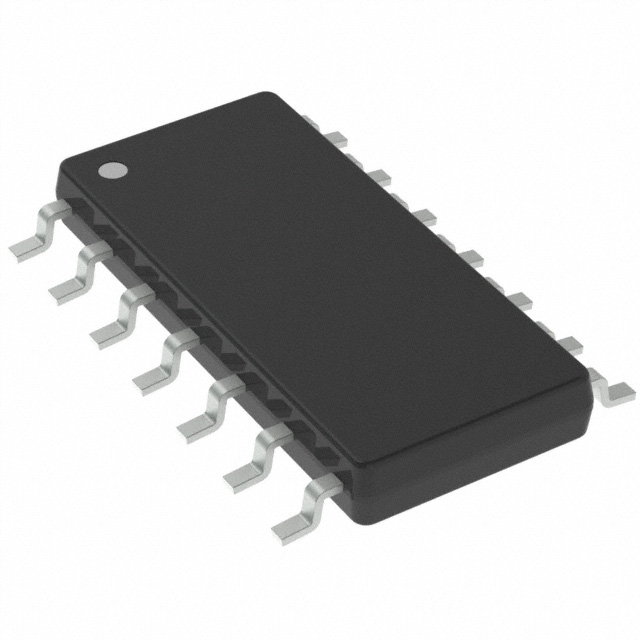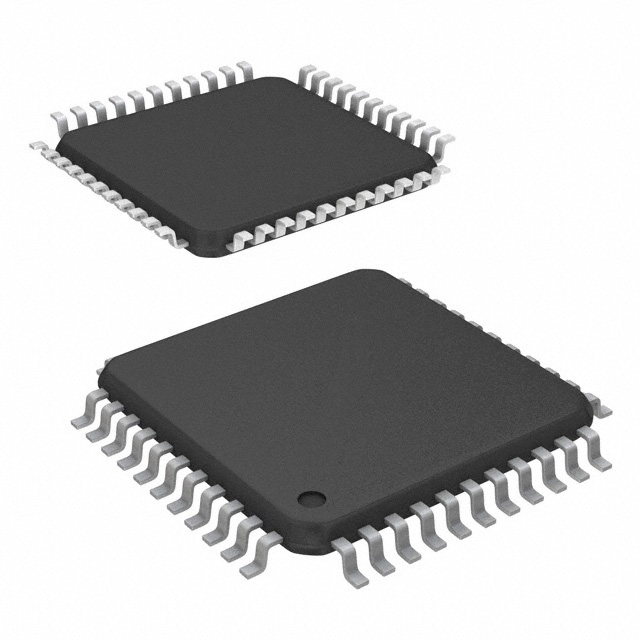


A practical look at ATMEGA16A-AU architecture, memory, analog functions, communication, integrated circuit design, PCB engineering, real-world applications, component sourcing, and ATMEGA16A-AU vs ATMEGA8A-AU selection.
The ATMEGA16A-AU is an 8-bit AVR microcontroller designed for embedded systems that need reliable control without unnecessary complexity. It combines 16 KB of programmable Flash memory, 1 KB of SRAM, 512 bytes of EEPROM, multiple timers, analog measurement, serial communication, and 32 programmable I/O lines in a compact 44-pin TQFP package.
Those numbers may look modest beside modern 32-bit processors, but they tell only part of the story. In many embedded products, the goal is not to run a large operating system. The goal is to read inputs, make decisions, control hardware, communicate with another device, and perform those jobs predictably every time the equipment is powered.
This is where ATMEGA16A-AU can still make practical sense. It sits in a useful middle position: more program space and I/O flexibility than very small AVR devices, while remaining simple enough for engineers to understand the complete hardware and firmware system.
What Is ATMEGA16A-AU?
ATMEGA16A-AU is a low-power 8-bit microcontroller based on the AVR enhanced RISC architecture. Its processor design is optimized so that many instructions can execute in a single clock cycle. At its maximum operating frequency of 16 MHz, the architecture can provide enough processing performance for a wide range of real-time control applications.
The device includes 16 KB of In-System Self-Programmable Flash for application firmware. It also provides 1 KB of internal SRAM for variables, buffers, calculations, and temporary runtime information, along with 512 bytes of EEPROM for information that needs to remain stored when power is removed.
The AU suffix identifies the 44-lead TQFP package option. This surface-mount format is useful for professionally assembled PCBs because it provides 32 programmable I/O lines while keeping the device footprint much more compact than a traditional through-hole package.
For many real products, the strength of ATMEGA16A-AU is not extreme processing speed. Its strength is predictable control with enough memory, analog capability, timers, I/O, and communication hardware to solve practical embedded problems without creating a large software stack.
ATMEGA16A-AU Key Specifications
| Feature | ATMEGA16A-AU | Design Meaning |
|---|---|---|
| CPU Architecture | 8-bit AVR RISC | Simple and predictable embedded processing |
| Maximum Clock | Up to 16 MHz | Suitable for many control and monitoring tasks |
| Flash Memory | 16 KB | Stores application firmware and boot code |
| SRAM | 1 KB | Used for variables, buffers, stacks, and runtime data |
| EEPROM | 512 Bytes | Useful for configuration and calibration data |
| Programmable I/O | 32 Lines | Supports sensors, buttons, relays, displays, and interfaces |
| ADC | 8-channel 10-bit | Measures multiple analog signals |
| PWM | 4 Channels | Useful for motor, LED, heater, and actuator control |
| Communication | USART, SPI, TWI | Connects external ICs, sensors, controllers, and modules |
| Package | 44-pin TQFP | Surface-mount format for compact PCB production |
| Operating Voltage | 2.7 V to 5.5 V | Fits common embedded power architectures |
| Industrial Range | -40°C to +85°C | Supports many industrial and commercial environments |
A specification table is useful for quick comparison, but good MCU selection requires more than checking numbers. Engineers should consider how many pins the final product needs, how large the firmware may become, how much temporary data will be stored in SRAM, how many analog channels are required, and whether future revisions could add new functions.
A design that appears comfortable during the first prototype can become tight after diagnostics, calibration menus, communication protocols, production testing, error handling, and field update functions are added.
Why ATMEGA16A-AU Still Makes Sense in Embedded Systems
The electronics industry naturally moves toward faster processors and larger memories. That does not mean every product needs them. A digital thermostat does not necessarily benefit from hundreds of megabytes of memory. A relay controller does not automatically become better because its CPU runs at hundreds of megahertz.
Many embedded systems spend most of their time waiting for an event: a button press, a sensor change, a serial command, a timer interrupt, or a threshold condition. In these applications, deterministic behavior and electrical reliability can matter more than raw CPU performance.
ATMEGA16A-AU is well suited to this type of work. Its architecture is easy to understand, peripheral behavior is relatively transparent, and the firmware can remain compact. Engineers can often trace a signal from the physical pin through a peripheral register and into application code without several layers of software abstraction.
That simplicity can make debugging faster. It can also reduce the number of hidden software interactions that must be considered when a product is expected to operate continuously for long periods.
A mature microcontroller can be a strong engineering choice when the application's real requirements are known. Newer is not automatically better; the better device is the one that solves the problem with acceptable cost, risk, power, manufacturing complexity, and development time.
ATMEGA16A-AU Integrated Circuit Design
Choosing the MCU is only the beginning of an effective integrated circuit design. The behavior of the finished board depends heavily on the circuits connected around the microcontroller.
Power integrity is one of the first design areas to consider. Bypass capacitors should be located close to MCU supply pins so they can respond quickly to short current changes. Power traces should be designed with suitable width and routing, and return current paths should be kept predictable.
Analog and digital sections deserve separate attention. The ATMEGA16A-AU includes AVCC and AREF connections for its ADC system. When accurate sensor readings are important, noisy motor currents, switching converters, relays, and fast digital signals should not share careless routing with sensitive analog traces.
Reset behavior is another important detail. Engineers should understand how the device behaves during power-up, supply dips, and unstable input conditions. Brown-out detection can be useful where a slow or disturbed power supply might otherwise allow code to execute at an unsuitable voltage.
The clock system also affects the overall design. Some applications can use an internal oscillator, while others may need an external crystal or resonator when tighter frequency accuracy is required.
A professional integrated circuit design therefore treats the microcontroller as one element inside a complete electrical system rather than as an isolated component.
ATMEGA16A-AU and PMIC Power Management Integrated Circuit Design
An embedded control board may include a regulator, DC-DC converter, battery charger, supervisor, load switch, or a more advanced PMIC power management integrated circuit. These devices have a different role from the ATMEGA16A-AU.
The microcontroller provides logic and decision-making. A PMIC manages electrical power. Depending on the system, the power stage may convert a battery voltage, create several supply rails, monitor current, sequence power domains, or protect the circuit from abnormal conditions.
For example, a battery-powered sensor controller could use a power management device to create a stable MCU supply. The ATMEGA16A-AU would then read sensors, process measurements, control indicators, and communicate with another module.
In industrial equipment, the board might start with a 12 V or 24 V input. A suitable DC-DC converter can reduce this voltage before a regulator provides a clean supply for the microcontroller and analog sections.
This division of responsibility improves design clarity. The MCU should not be expected to replace dedicated power-management hardware, and a sophisticated PMIC cannot replace the application logic performed by the microcontroller.
Using ATMEGA16A-AU in an Integrated Circuit Card
An integrated circuit card used in a control system normally contains several functional blocks. These may include the microcontroller, regulators, communication transceivers, sensor interfaces, EEPROM, protection components, connectors, status LEDs, switches, MOSFETs, and output drivers.
ATMEGA16A-AU can operate as the central controller of this kind of board. Its 32 programmable I/O lines allow designers to connect a relatively broad mix of digital signals without immediately adding external I/O expanders.
The analog inputs can monitor temperature, voltage, current, pressure, light level, or other sensor outputs. Timer hardware can generate accurate timing events and PWM signals. USART, SPI, and TWI can connect communication modules, memories, displays, sensors, or secondary controllers.
One useful PCB design strategy is to avoid consuming every available pin during the first hardware revision. Leaving test points, spare I/O, or accessible expansion signals can make future firmware and hardware changes much easier.
That small amount of design margin can be especially valuable when the same integrated circuit card is expected to support several product variants.
ADC and Sensor Applications
The ATMEGA16A-AU includes an 8-channel, 10-bit analog-to-digital converter. This allows the controller to measure analog voltage signals and convert them into values that firmware can process.
Typical examples include thermistors, potentiometers, pressure transducers, current-sense circuits, battery voltage dividers, gas sensors, analog light sensors, and other devices that generate a voltage related to a physical measurement.
The TQFP version also supports differential ADC functions. This can be useful in selected measurement designs where the difference between two signals is more important than their absolute voltage relative to ground.
ADC resolution alone does not guarantee accurate measurement. Reference voltage stability, source impedance, PCB grounding, power-supply noise, sampling frequency, filtering, calibration, and firmware averaging can all affect the result.
For this reason, experienced engineers normally treat the ADC as part of an analog signal chain rather than simply connecting a sensor and assuming every conversion will be perfectly accurate.
USART, SPI, and TWI Communication
Communication interfaces are a major reason ATMEGA16A-AU can support more than simple standalone control. The device provides three widely used embedded communication options.
USART
USART is useful for serial terminals, diagnostic ports, communication modules, industrial interface circuits, another microcontroller, or any device that uses compatible asynchronous serial communication.
SPI
SPI is commonly used for displays, external memories, ADCs, DACs, sensors, radio modules, and other peripherals that benefit from simple high-speed synchronous communication.
TWI / I2C-Compatible
The two-wire interface is useful when several compatible devices must share a compact bus. Typical examples include sensors, RTC devices, EEPROMs, and I/O expanders.
The correct interface depends on system requirements. SPI often provides higher data rates but normally uses more signal lines. TWI reduces wiring and supports multiple addressed devices. USART can be convenient for conventional serial communication and debugging.
A good design chooses the interface based on electrical environment, bandwidth, distance, number of peripherals, software complexity, and available pins rather than simply using the interface that appears most familiar.
Timers, PWM, Interrupts, and Real-Time Control
The ATMEGA16A-AU provides two 8-bit Timer/Counters and one 16-bit Timer/Counter. These peripherals can perform timing tasks without forcing the CPU to continuously count software delays.
Timers can be used for periodic sensor sampling, pulse measurement, event scheduling, frequency generation, input capture, and output comparison. The device also provides four PWM channels, making it useful for applications such as LED dimming, motor speed commands, heating control, servo-related signals, and other variable-duty-cycle outputs.
Hardware interrupts allow the MCU to react quickly when important events occur. A button change, external digital signal, communication event, timer event, or ADC completion can trigger code without requiring the main program to constantly poll every condition.
The key design principle is to keep interrupt service routines efficient. An interrupt can record a time-sensitive event or move data into a buffer, while slower processing is handled by the main application.
ATMEGA16A-AU vs ATMEGA8A-AU
The ATMEGA16A-AU vs ATMEGA8A-AU comparison is useful because the two devices share the same general AVR design philosophy but target different levels of embedded complexity.
| Feature | ATMEGA16A-AU | ATMEGA8A-AU |
|---|---|---|
| Architecture | 8-bit AVR | 8-bit AVR |
| Maximum Clock | 16 MHz | 16 MHz |
| Flash Memory | 16 KB | 8 KB |
| SRAM | 1 KB | 1 KB |
| EEPROM | 512 Bytes | 512 Bytes |
| General I/O | 32 Lines | 23 Lines |
| ADC | 8-channel, 10-bit | 8-channel, 10-bit in TQFP |
| PWM Channels | 4 | 3 |
| AU Package | 44-TQFP | 32-TQFP |
| Typical Design Position | Medium-size control projects | Smaller embedded applications |
The largest practical difference is Flash memory and available I/O. ATMEGA16A-AU provides twice the program Flash of ATMEGA8A-AU and offers more programmable pins.
This can make a meaningful difference when a design includes several sensors, a user interface, communication, diagnostic functions, relay outputs, status LEDs, and future feature expansion.
ATMEGA8A-AU can still be a strong choice when firmware requirements are small and PCB area or cost is especially important. Choosing ATMEGA16A-AU only because it has larger numbers is not necessarily good engineering.
Choose the MCU that gives the finished product enough margin. Too little margin can create painful redesigns, while excessive unused capability can increase cost without improving the customer experience.
When Should You Choose ATMEGA16A-AU Instead of ATMEGA8A-AU?
Choose ATMEGA16A-AU when the firmware may grow beyond a simple control loop, especially if the project needs several independent functions.
A product may begin as a basic sensor controller but later gain a display menu, EEPROM configuration, serial commands, production diagnostics, safety monitoring, calibration routines, fault logs, and additional communication.
The first firmware prototype often represents only part of the final program. Engineers should therefore estimate memory requirements based on the shipping product rather than the first laboratory demonstration.
The additional I/O available on ATMEGA16A-AU can also reduce the need for external expanders when a board contains many switches, LEDs, relays, sensors, and control signals.
ATMEGA8A-AU remains attractive for smaller systems where 8 KB of Flash and 23 general-purpose I/O lines are sufficient. In those cases, using the smaller device may result in a more economical and compact design.
Firmware Architecture for ATMEGA16A-AU
A well-organized firmware structure can make more difference than processor speed. ATMEGA16A-AU projects benefit from separating hardware drivers from application logic.
For example, GPIO, ADC, timer, EEPROM, USART, SPI, and TWI functions can each be handled through small modules. The main application then works with clean interfaces instead of manipulating hardware registers throughout every part of the program.
This structure improves testing and makes future maintenance easier. If a communication method changes, engineers can modify one driver instead of searching through the entire project.
Long blocking delays should also be avoided in applications that perform several tasks. A state machine or timer-driven scheduler can allow the MCU to read sensors, update outputs, receive serial data, check safety conditions, and refresh a display without freezing the system.
SRAM usage deserves attention because the device provides 1 KB. Large arrays, unnecessary global variables, deep call stacks, and oversized communication buffers can consume memory quickly.
The best firmware for an 8-bit MCU is not necessarily complicated. Clear resource management and predictable timing are usually more valuable than adding unnecessary software layers.
Designing a Reliable ATMEGA16A-AU PCB
A reliable microcontroller cannot correct every weakness in a poor PCB. Electrical layout, power routing, connectors, protection, grounding, and component placement have a direct effect on product stability.
- Place decoupling capacitors close to MCU supply pins.
- Route AVCC and analog references carefully.
- Keep noisy switching currents away from ADC traces.
- Provide accessible ISP programming connections.
- Keep useful test points for production testing.
- Check reset and brown-out behavior.
- Protect external connectors against ESD where required.
- Use suitable drivers for motors, relays, and high-current loads.
- Verify the exact 44-TQFP footprint before fabrication.
- Review grounding and return-current paths before final PCB release.
One common design error is driving a load directly from an MCU pin simply because the load appears small. Motors, relays, large LEDs, solenoids, heaters, and similar devices should normally use an appropriate transistor, MOSFET, driver IC, or relay interface.
Protection becomes especially important when signals leave the PCB. Cables can introduce electrostatic discharge, electrical noise, or unexpected voltage conditions. Interface protection should therefore be chosen according to the actual installation environment.
ATMEGA16A-AU in Industrial and Commercial Control
ATMEGA16A-AU can be used in control panels, environmental monitoring devices, measurement equipment, small automation controllers, power-control products, access systems, alarms, lighting systems, and other embedded hardware.
Industrial design requires more than selecting an MCU with the correct temperature range. Inputs may need filtering, surge protection, isolation, or voltage translation. Communication lines may require dedicated transceivers. Power inputs may need reverse-polarity, transient, and overvoltage protection.
For example, a 24 V industrial signal must not be connected directly to an MCU input. A suitable input circuit can translate and protect the signal before it reaches ATMEGA16A-AU.
Likewise, a long communication cable should use the correct physical-layer interface instead of exposing logic-level MCU pins directly to an electrically noisy environment.
This is an important engineering distinction: the microcontroller processes information, while the surrounding circuitry makes that information electrically safe and usable.
LDR Sensors and Analog Monitoring Projects
A simple light-dependent resistor is a useful example of how ATMEGA16A-AU can interact with analog components. An LDR and resistor can form a voltage divider whose output changes with light level. The MCU's ADC can measure this voltage and convert it into a value used by firmware.
The system could automatically control lighting, detect day and night conditions, monitor an enclosure, trigger an alarm, or record environmental changes.
Searches such as ldr price philippines electronic components usually come from buyers comparing sensor and component prices for educational, hobby, repair, or commercial projects. Price is useful, but designers should also check resistance range, light response, tolerance, physical size, and environmental requirements.
A low-cost sensor that behaves differently between production batches can create more engineering work than a slightly more expensive part with better documented characteristics.
Finding an Electronic Components Store Near Me
Engineers searching for an electronic components store near me may need a component immediately for prototype development, repair, or laboratory testing.
Local component stores can be useful because engineers can obtain resistors, capacitors, connectors, sensors, development boards, and common ICs without waiting for international delivery.
When buying ATMEGA16A-AU, however, the exact manufacturer part number is important. A generic listing for "ATmega16" does not automatically guarantee the AU package or the exact device required by a PCB.
Package, temperature range, packaging method, manufacturer, and product revision can all matter in production.
Some electronics-related searches also include educational physics terms such as determine the x component of the force on the electron. That phrase describes a physics calculation rather than an electronic component. Students often move between theoretical electronics topics and practical hardware sourcing, but engineers purchasing production components should search by exact manufacturer part number whenever possible.
Buying Electronic Components Online
The internet has made it much easier to compare electronic components online. Engineers can search by manufacturer part number, package, electrical specification, stock level, and quantity instead of relying only on the inventory of a local store.
Searching for electronic parts online is particularly useful when a project requires a specific microcontroller, regulator, connector, sensor, transistor, memory device, or passive component that may not be stocked locally.
Purchasing teams may also search terms such as master electronics online components while comparing distributor channels and available inventory.
For professional sourcing, however, the lowest displayed price should not automatically determine the purchase. Buyers should consider the exact manufacturer part number, traceability, available documentation, quantity, packaging, lead time, storage history, and supplier reputation.
Component sourcing is part of engineering risk management. A part that is electrically correct but poorly sourced can still create manufacturing delays, quality problems, or expensive field failures.
Where to Buy Electronic Components for Production
Anyone searching where to buy electronic components will find several types of supply channels: manufacturer-direct purchasing, authorized distributors, independent distributors, specialist suppliers, local stores, and online marketplaces.
The correct channel depends on project stage and risk. A hobby prototype may prioritize convenience and low minimum order quantity. A commercial production line may prioritize traceability, consistent packaging, inspection, stable delivery, and long-term supply support.
Before buying ATMEGA16A-AU for production, purchasing teams should verify the complete ordering code and confirm that the package matches the PCB footprint.
- Confirm ATMEGA16A-AU as the exact requested part.
- Verify the 44-pin TQFP package.
- Check required operating temperature.
- Confirm quantity and packaging format.
- Review stock and expected lead time.
- Request traceability when required by the project.
- Check storage and moisture handling requirements.
- Compare total procurement risk, not only unit price.
A small saving on component price can disappear quickly if questionable parts cause programming failures, soldering problems, inconsistent operation, rework, or production downtime.
Why Exact Part Numbers Matter
Component names are often shortened during conversation. An engineer may say "ATmega16," but a purchasing document should normally use the full manufacturer part number.
The complete identifier ATMEGA16A-AU tells the purchasing and manufacturing teams much more than a general family name. It helps them verify package, ordering information, PCB compatibility, and documentation.
This becomes especially important when BOM data is transferred between engineering, procurement, contract manufacturing, quality control, and inventory systems.
A strong BOM should reduce interpretation. The goal is for every team to understand exactly which component should be purchased and assembled without guessing.
Is ATMEGA16A-AU Suitable for a New Design?
The answer depends on the product rather than the age of the microcontroller.
A new project that requires wireless connectivity, high-resolution graphics, advanced cryptography, USB functions, large RAM, high-speed signal processing, or machine-learning workloads will normally benefit from a more capable modern MCU family.
A product that needs digital I/O, ADC measurements, timers, PWM, EEPROM storage, simple serial communication, and deterministic real-time control may not require that level of hardware.
ATMEGA16A-AU can therefore remain practical in established AVR platforms, replacement boards, educational systems, industrial controllers, test equipment, small machines, and products where engineers already have proven AVR firmware and manufacturing knowledge.
The decision should include firmware size, required peripherals, current consumption, PCB space, component lifecycle strategy, development tools, sourcing, certification requirements, and long-term maintenance.
Choosing the most powerful processor is easy. Choosing the processor that creates the lowest overall product risk requires more thought.
A Better Way to Think About MCU Performance
Clock speed is only one measurement of performance. In embedded design, useful performance often means completing a required task within a known deadline.
If a controller reads a temperature sensor every 100 milliseconds, updates a relay correctly, receives serial commands without losing data, and responds to safety inputs on time, a much faster CPU may not improve the product.
The real design question is whether the MCU has sufficient processing time, memory, interfaces, and electrical resources for the worst-case operating condition.
This perspective helps explain why 8-bit AVR devices remain relevant in many systems. The software can be compact, boot time is short, hardware behavior is predictable, and the development environment is familiar to many embedded engineers.
Performance should therefore be evaluated at the system level rather than by comparing one processor specification in isolation.
Common ATMEGA16A-AU Applications
- Industrial control panels
- Sensor monitoring systems
- Temperature controllers
- Digital measurement equipment
- LED lighting controllers
- Motor control interfaces
- Fan controllers
- Battery monitoring products
- Alarm and security equipment
- Access control systems
- Educational development boards
- Laboratory instruments
- Integrated circuit card controllers
- Small automation equipment
- Protocol interface boards
- Data acquisition systems
- Machine control modules
- Equipment replacement boards
These applications share a common requirement: they need a controller that can reliably interact with real hardware. They may not require a large operating system, but they do require stable timing, clear I/O behavior, robust PCB design, and firmware that can be maintained over the product lifetime.
Frequently Asked Questions About ATMEGA16A-AU
What is ATMEGA16A-AU?
ATMEGA16A-AU is an 8-bit AVR microcontroller in a 44-pin TQFP surface-mount package. It provides 16 KB Flash, 1 KB SRAM, 512 bytes EEPROM, 32 programmable I/O lines, timers, PWM, an 8-channel 10-bit ADC, and multiple serial interfaces.
What does AU mean in ATMEGA16A-AU?
The AU ordering code identifies the 44-lead TQFP package version of ATMEGA16A. Package identification is important because it determines PCB footprint and assembly requirements.
What is the maximum speed of ATMEGA16A-AU?
ATMEGA16A supports operation up to 16 MHz when used within the required electrical and clock conditions.
How much memory does ATMEGA16A-AU have?
It provides 16 KB of Flash program memory, 1 KB of SRAM, and 512 bytes of EEPROM.
ATMEGA16A-AU vs ATMEGA8A-AU: which is better?
Neither device is automatically better for every design. ATMEGA16A-AU offers 16 KB Flash and 32 programmable I/O lines, making it more flexible for larger projects. ATMEGA8A-AU provides 8 KB Flash and fewer I/O lines, which may be enough for smaller and more cost-sensitive systems.
Can ATMEGA16A-AU read analog sensors?
Yes. It includes an 8-channel 10-bit ADC, allowing it to measure analog voltage signals from many sensor and monitoring circuits.
Can ATMEGA16A-AU control a motor?
It can generate PWM and logic control signals for motor applications, but the motor should normally be driven through a suitable MOSFET, transistor stage, motor driver IC, or other power interface.
Does ATMEGA16A-AU support I2C?
It provides a Two-Wire Interface, commonly used with compatible I2C-style sensors, memories, RTC devices, and other peripherals.
Where can I buy ATMEGA16A-AU?
Buyers looking for electronic components online or searching where to buy electronic components should use the exact ATMEGA16A-AU ordering code and compare package, stock, traceability, documentation, delivery time, and supplier reliability before ordering.
Final Thoughts on ATMEGA16A-AU
The ATMEGA16A-AU is a good example of an embedded processor whose value comes from balance rather than extreme specifications.
Its 16 KB Flash, 1 KB SRAM, EEPROM storage, 32 programmable I/O lines, 8-channel 10-bit ADC, timers, four PWM channels, USART, SPI, TWI, and compact 44-pin TQFP package provide a useful set of resources for practical control systems.
Compared with ATMEGA8A-AU, it offers twice the Flash program memory and more I/O flexibility. That additional margin can become important as a product moves from prototype firmware to production firmware with diagnostics, communication, calibration, safety functions, and future updates.
The most valuable feature of ATMEGA16A-AU may be its balance between capability and simplicity. It gives engineers enough hardware to solve many real embedded problems without forcing every project into a larger and more complicated computing platform.
Good results still depend on the complete system. Stable power, sensible PCB routing, correct analog design, appropriate protection, suitable drivers, efficient firmware, accurate BOM data, and dependable component sourcing are all part of a successful product.
For engineers evaluating an AVR-based integrated circuit design, industrial controller, sensor board, integrated circuit card, embedded monitoring device, or replacement control platform, ATMEGA16A-AU remains a device worth understanding.
The best MCU is not the device with the longest specification list. It is the component that meets the application's real requirements with enough margin for reliability, manufacturing, software maintenance, cost control, and future development.