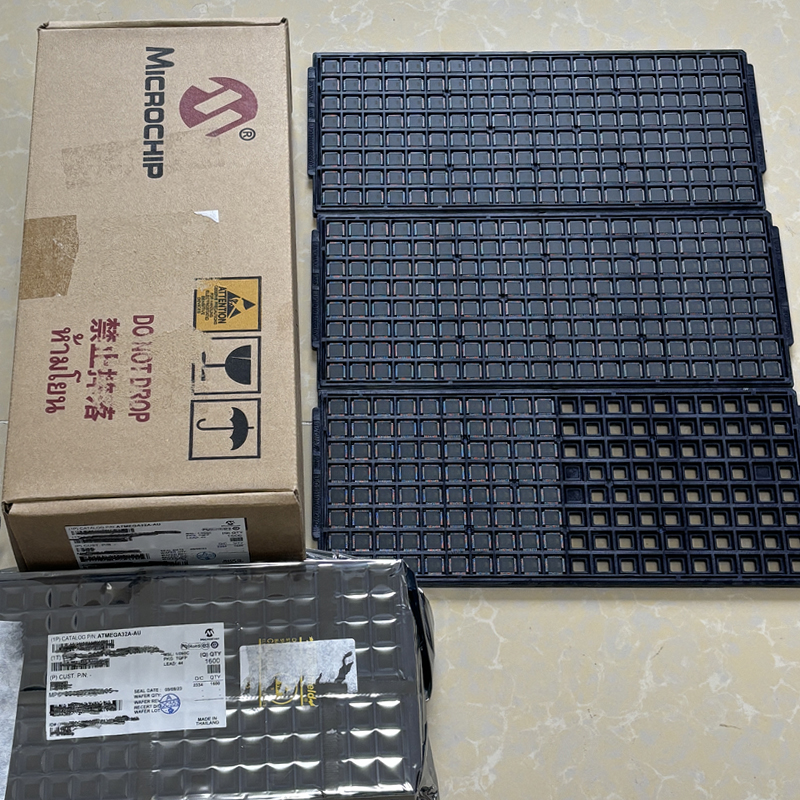
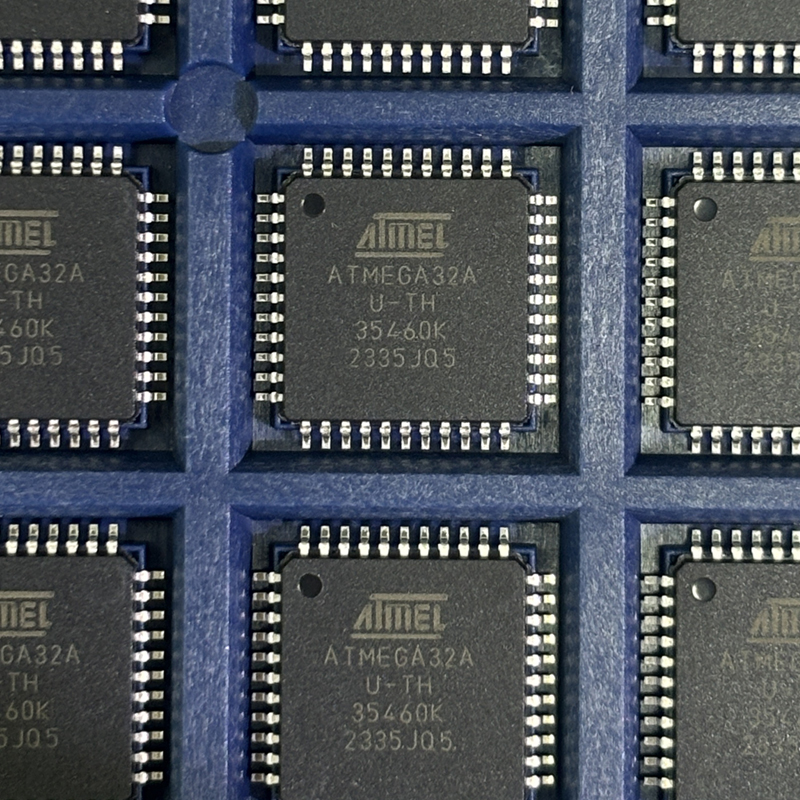
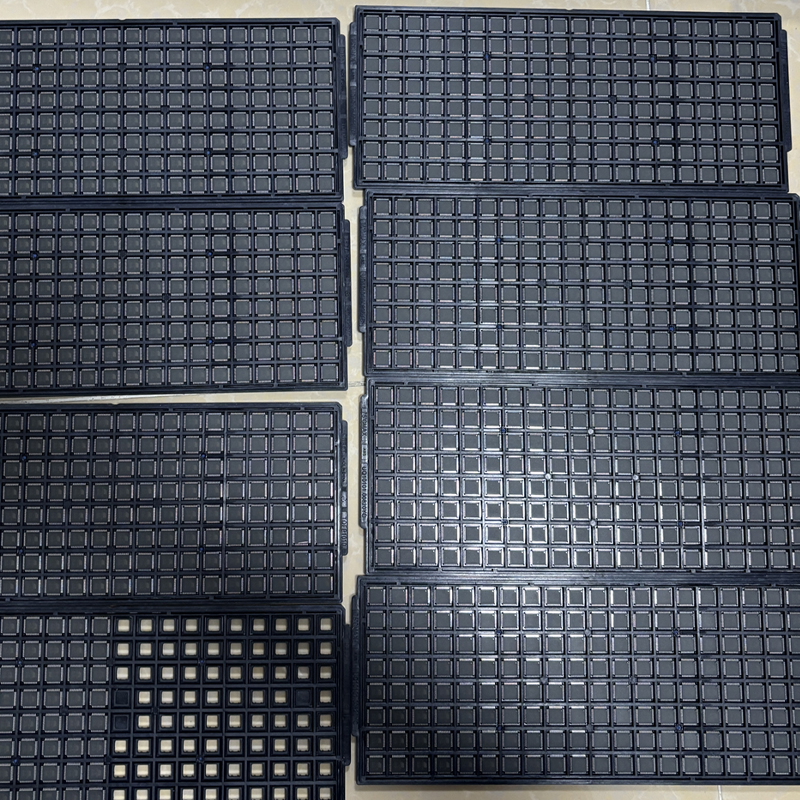
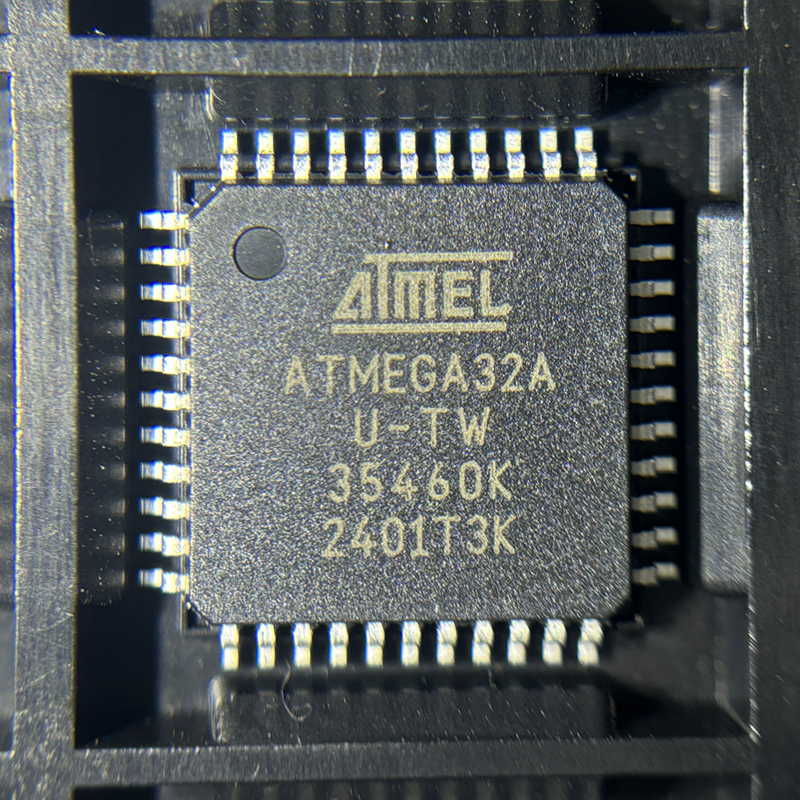


ATMEGA32A-AU Complete Guide: Specs, Design, Applications & MCU Comparison
A practical engineering guide to the 8-bit AVR microcontroller-covering memory, interfaces, PCB design, real-world applications, sourcing, and ATMEGA8A-AU / ATMEGA16A-AU comparisons.
The ATMEGA32A-AU is a practical 8-bit AVR microcontroller for engineers who need a simple, stable, and well-understood controller for embedded products. It combines 32 KB of Flash program memory, 2 KB of SRAM, 1 KB of EEPROM, digital I/O, analog inputs, timers, serial interfaces, and hardware control functions inside a compact surface-mount package. For many designs, this balance is more important than having the newest or most powerful processor.
When people search for atmega32a au, atmega32 au, or simply ATMEGA32, they are often not looking for a processor that can run an operating system or perform complex artificial intelligence. They usually need a dependable controller that can read sensors, control relays, generate PWM signals, communicate with other devices, store settings, and run predictable firmware.
That is where the ATMEGA32A-AU still makes sense. Its architecture is easy to understand, its hardware resources are clearly defined, and its 44-pin TQFP package is suitable for compact PCB production. It is especially useful when a project needs more memory and I/O than an ATMEGA8A-AU but does not require the features or complexity of a much newer 32-bit MCU.
What Is the ATMEGA32A-AU?
The ATMEGA32A-AU is an AVR-family 8-bit microcontroller from Microchip Technology. The device uses an enhanced RISC architecture designed to execute many instructions efficiently. It can operate at frequencies up to 16 MHz and includes 32 KB of in-system programmable Flash memory.
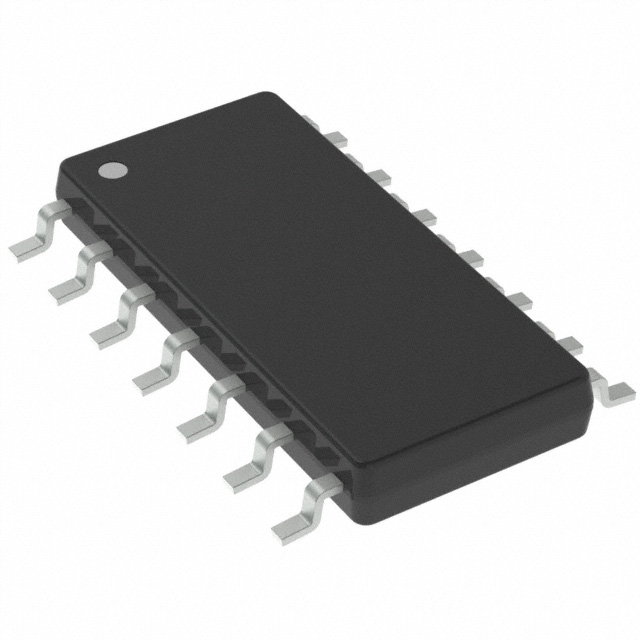
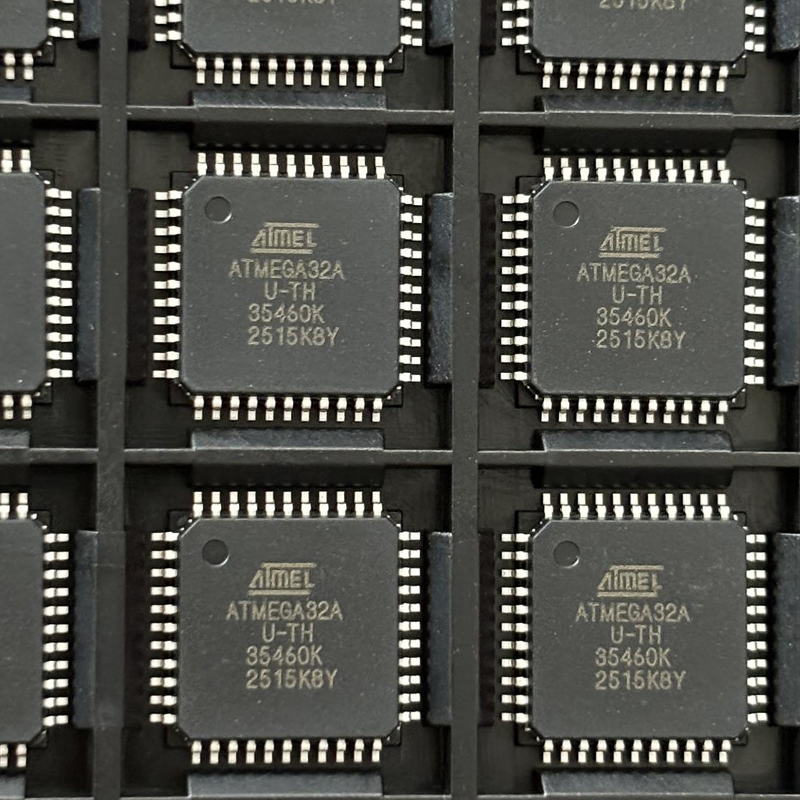
The AU version is supplied in a 44-pin TQFP surface-mount package. This makes it different from through-hole versions that may be easier for breadboard experiments but take more PCB space. For commercial boards, control modules, small instruments, and embedded equipment, the TQFP package can provide a good balance between board size and manufacturing simplicity.
The device also includes 2 KB SRAM for temporary runtime data and 1 KB EEPROM for information that should remain stored after power is removed. EEPROM can be useful for calibration values, counters, machine settings, user preferences, identification numbers, or configuration parameters.
ATMEGA32A-AU Key Specifications
| Feature | ATMEGA32A-AU |
|---|---|
| Architecture | AVR 8-bit RISC |
| Maximum Clock Frequency | Up to 16 MHz |
| Flash Program Memory | 32 KB |
| SRAM | 2 KB |
| EEPROM | 1 KB |
| Package | 44-pin TQFP |
| ADC | 8-channel, 10-bit ADC |
| Serial Communication | USART, SPI, TWI/I2C-compatible interface |
| Timers | Multiple 8-bit and 16-bit timer/counter resources |
| Programming | In-system programmable Flash |
| Mounting | Surface mount |
A specification table is useful, but selecting an MCU only from a table can lead to poor design decisions. The important question is whether these resources match the actual behavior of the product.
For example, a controller that monitors eight analog sensors, drives a display, operates several switches, stores calibration data, and communicates through UART can consume I/O and memory much faster than expected. In such cases, the additional resources of the ATMEGA32A-AU can provide valuable design margin.
Why ATMEGA32A-AU Still Has Value in Embedded Design
Modern engineering often focuses on faster processors, larger memory, wireless connectivity, and advanced peripherals. Those features are useful, but they are not automatically better for every product.
A thermostat, motor controller, small industrial panel, battery charger, measuring instrument, vending machine controller, alarm system, sensor hub, or educational development board may only need a small and deterministic processor.
For these products, simplicity has real engineering value.
A smaller MCU architecture can make firmware easier to audit. Timing can be easier to understand. Hardware interfaces are easier to trace. Boot behavior is predictable. Engineers can often identify problems without dealing with large operating systems, complex software layers, or hundreds of unused peripheral options.
The ATMEGA32A-AU is therefore interesting not because it tries to compete with every modern MCU feature, but because it can perform common control tasks with relatively little complexity.
ATMEGA32A-AU Integrated Circuit Design Considerations
Selecting the microcontroller is only one part of a good integrated circuit design. The surrounding circuit often determines whether the finished product will be stable or unreliable.
The first area to consider is power. A stable supply, proper grounding, and suitable bypass capacitors should be placed close to the MCU power pins. Long PCB traces between a bypass capacitor and the device can reduce the capacitor's effectiveness at high frequencies.
A designer should also think about reset behavior, programming access, oscillator configuration, analog grounding, communication connectors, and protection from external signals.
One common mistake is to focus on the microcontroller while treating the power section as an afterthought. In a real product, the MCU may share a board with motors, relays, displays, sensors, radio modules, or high-current loads. These parts can create voltage drops and electrical noise.
A good PCB should separate noisy current paths from sensitive analog signals whenever possible. Decoupling capacitors should be located near the device. If the ADC is used for accurate measurements, the analog supply and reference arrangement deserve special attention.
ATMEGA32A-AU and the Power Management Circuit
The ATMEGA32A-AU is normally one part of a larger electronic system. That system may use linear regulators, DC-DC converters, protection circuits, MOSFET switches, or a PMIC power management integrated circuit.
A PMIC and a microcontroller perform very different jobs. The ATMEGA32A-AU makes logical decisions and processes signals. A PMIC normally manages voltage conversion, power sequencing, charging, monitoring, or power distribution.
In a battery-powered device, for example, a PMIC may generate the required supply voltage while the ATMEGA32A-AU measures sensors and controls system functions. In an industrial control board, a DC-DC converter can reduce a higher input voltage before a regulator provides a clean supply for the MCU.
This separation of responsibilities is important. The microcontroller should not be viewed as a replacement for dedicated power management hardware.
Using ATMEGA32A-AU in an Integrated Circuit Card or Control Board
An integrated circuit card or embedded controller board often contains much more than a single processor. It may include the MCU, voltage regulators, communication transceivers, EEPROM, sensors, connectors, protection devices, LEDs, switches, and output drivers.
The ATMEGA32A-AU can act as the central controller of such a card. Its digital ports can read switches and status signals. Its ADC can measure voltages from analog sensors. Timers can generate precise intervals or PWM signals, while serial interfaces can connect external modules.
This approach is useful in industrial interfaces, small automation equipment, access control panels, laboratory devices, environmental monitors, educational systems, and custom control products.
A useful design rule is to avoid assigning every available MCU pin during the first PCB revision. Keeping one or two signals available for debugging, status output, future sensors, or product updates can save significant redesign work later.
ATMEGA32A-AU ADC and Sensor Applications
The built-in analog-to-digital converter is one of the most useful parts of the ATMEGA32A-AU for sensor projects. It allows the MCU to convert analog voltages into digital values that firmware can process.
Typical analog sources include temperature sensors, potentiometers, pressure sensors, light sensors, battery monitors, current-sense circuits, and other analog outputs.
A light-dependent resistor is a simple example. People searching for phrases such as ldr price philippines electronic components may be comparing the cost of LDR sensors and other parts for small electronic projects. An LDR can be combined with a resistor to create a voltage divider, and the resulting voltage can be measured by an ATMEGA32A-AU ADC input.
The firmware can then use the ADC value to switch a lamp, adjust brightness, trigger an alarm, or record changing light levels.
However, ADC accuracy depends on more than ADC resolution. PCB layout, reference voltage quality, sensor impedance, supply noise, sampling method, and firmware averaging can all affect results.
ATMEGA32A-AU Communication Interfaces
Many embedded products need to exchange data with other devices. The ATMEGA32A-AU supports several commonly used communication methods.
The correct interface depends on distance, speed, number of devices, electrical environment, and available MCU pins. SPI is often faster but requires more signals. Two-wire communication can connect several devices with fewer lines. USART is convenient when a conventional serial communication channel is required.
USART
USART communication is useful for serial terminals, external communication modules, debugging interfaces, industrial modules, and communication with another microcontroller.
SPI
SPI can provide fast communication with peripherals such as displays, ADCs, DACs, memory devices, and other digital ICs.
TWI / I2C-Compatible Communication
The two-wire interface can connect sensors, EEPROM devices, real-time clocks, expanders, and many other low-speed peripherals while using only two main communication lines.
ATMEGA32A-AU vs ATMEGA16A-AU
One of the most useful comparisons for designers is ATMEGA32A-AU vs ATMEGA16A-AU. The two devices are closely related, but the ATMEGA32A-AU provides more memory for projects with growing firmware requirements.
| Feature | ATMEGA32A-AU | ATMEGA16A-AU |
|---|---|---|
| Core | 8-bit AVR | 8-bit AVR |
| Maximum Speed | 16 MHz | 16 MHz |
| Flash | 32 KB | 16 KB |
| SRAM | 2 KB | 1 KB |
| EEPROM | 1 KB | 512 bytes |
| Package | 44-TQFP | 44-TQFP |
If firmware is small and unlikely to grow, the ATMEGA16A-AU may be enough. But memory requirements often increase after the first prototype. Engineers may later add communication protocols, calibration routines, menu systems, error logging, additional sensor processing, or diagnostic functions.
This is where the ATMEGA32A-AU provides useful headroom.
The extra Flash is not simply a larger number on a datasheet. It can reduce the pressure to remove useful diagnostic code or spend engineering time heavily optimizing firmware just to make the program fit.
For a production design expected to evolve through several firmware versions, that margin can be worth more than a small component cost difference.
ATMEGA32A-AU vs ATMEGA8A-AU
The difference becomes larger when comparing ATMEGA32A-AU vs ATMEGA8A-AU.
| Feature | ATMEGA32A-AU | ATMEGA8A-AU |
|---|---|---|
| Architecture | 8-bit AVR | 8-bit AVR |
| Maximum Speed | 16 MHz | 16 MHz |
| Flash | 32 KB | 8 KB |
| SRAM | 2 KB | 1 KB |
| EEPROM | 1 KB | 512 bytes |
| Package | 44-TQFP | 32-TQFP |
| Typical Selection Reason | More memory and I/O flexibility | Smaller, simpler control applications |
The ATMEGA8A-AU can be a good choice for a small control circuit with limited firmware. It can handle switches, simple displays, basic sensors, PWM control, and communication functions.
However, 8 KB of program memory can become restrictive as firmware grows.
The ATMEGA32A-AU provides four times the Flash capacity of the ATMEGA8A-AU. It also uses a larger package, giving the design additional I/O flexibility.
The choice should therefore not be based on the idea that the ATMEGA32A-AU is simply "better." A better MCU is the one that fits the application with enough margin but without unnecessary cost or board complexity.
ATMEGA8A-AU vs ATMEGA16A-AU vs ATMEGA32A-AU: Which Should You Choose?
A simple decision method can make MCU selection much easier.
Choose the ATMEGA8A-AU when the firmware is small, the number of required pins is limited, and cost or PCB size is a major concern.
Choose the ATMEGA16A-AU when the application needs a middle level of program memory and the 44-pin package fits the board.
Choose the ATMEGA32A-AU when you expect larger firmware, more data handling, more I/O usage, more future features, or a longer product development cycle.
One practical engineering lesson is to choose memory based on the final product rather than the first demonstration program. A prototype that initially uses 7 KB of Flash may later require user menus, communications, configuration storage, diagnostics, safety checks, and production test routines.
Leaving reasonable headroom can make future firmware revisions much easier.
ATMEGA32A-AU for Motor and PWM Control
The timer resources inside the ATMEGA32A-AU make it useful for many control applications. PWM can be used to control LED brightness, motor speed, heaters, buzzers, and other loads.
The MCU itself should normally provide only the control signal. Higher-current loads should be driven through suitable MOSFETs, transistor stages, driver ICs, relays, or other power devices.
For motor control, flyback protection and electrical noise management are especially important. A motor can generate noise that causes false resets or unstable ADC readings if the PCB and power system are poorly designed.
Separating high-current paths from logic circuits, adding appropriate suppression components, and maintaining good grounding can improve reliability much more than changing firmware.
ATMEGA32A-AU for Industrial Control
The ATMEGA32A-AU can also be used in relatively simple industrial control systems such as counters, control panels, measurement modules, small automation controllers, interface boards, and monitoring equipment.
In these environments, the design around the MCU becomes particularly important.
External signals may require filtering, isolation, level conversion, surge protection, or ESD protection. A 24 V industrial signal, for example, should not be connected directly to a microcontroller I/O pin.
Likewise, communication over long cables may require dedicated transceiver devices rather than direct MCU-level signals.
A reliable industrial design is created by combining the microcontroller with the correct interface and protection circuits.
Firmware Development Strategy
A good ATMEGA32A-AU firmware project should be structured so that hardware control and application logic are not mixed everywhere in the code.
A simple architecture may separate GPIO drivers, ADC functions, timer functions, communication routines, EEPROM management, application logic, and fault handling.
This makes the project easier to test and maintain.
Interrupt routines should also remain short whenever possible. An interrupt can record an event or move data into a buffer while the main program handles slower processing.
Another useful technique is to avoid long blocking delays in products that must perform several tasks. Timer-based scheduling or a simple state machine can allow the MCU to read sensors, update outputs, handle serial data, and check safety conditions without freezing the entire program.
Designing a Reliable ATMEGA32A-AU PCB
The physical PCB design is just as important as the firmware. The following points are worth considering in an ATMEGA32A-AU board:
- Place bypass capacitors close to the MCU supply pins.
- Keep programming signals accessible during development and production.
- Protect external I/O where cables can introduce ESD or electrical noise.
- Keep analog traces away from high-current switching paths.
- Use a clean ground strategy.
- Check oscillator requirements carefully.
- Provide a reliable reset circuit.
- Keep sufficient PCB test points for production troubleshooting.
- Confirm the TQFP footprint before PCB fabrication.
- Do not leave unused inputs in undefined states when they can affect operation.
These details may look small individually, but they often determine whether a prototype works only on a laboratory table or continues operating reliably inside a finished product.
How to Find an Electronic Components Store Near Me
Searches such as electronic components store near me often come from engineers who need parts immediately for a prototype or repair. A local store can be useful when delivery time matters more than unit price.
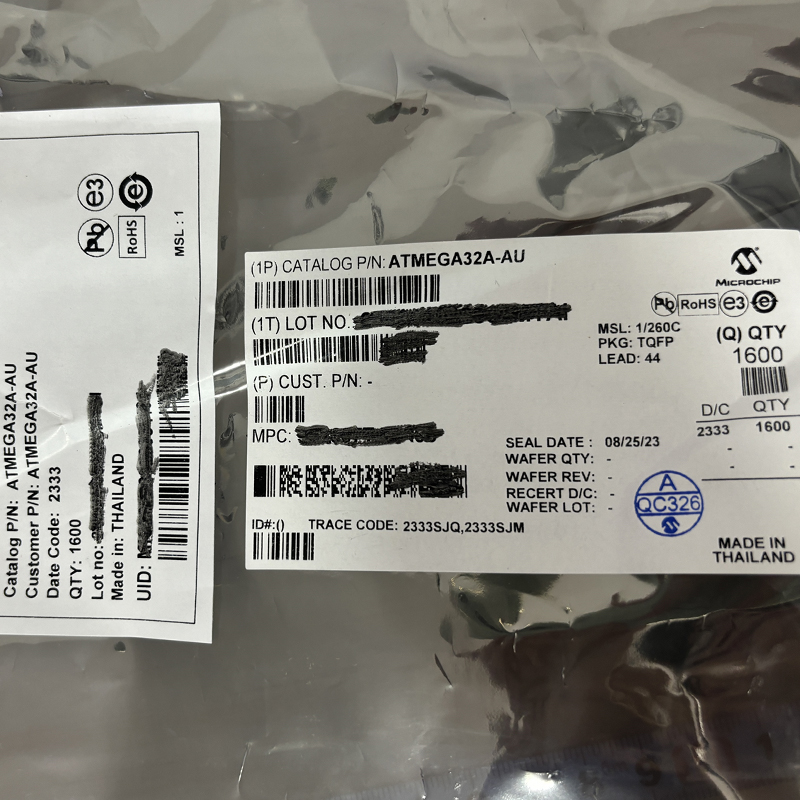
However, when buying a microcontroller such as the ATMEGA32A-AU, buyers should confirm the exact manufacturer part number instead of asking only for an "ATmega32."
Package type matters. Temperature grade matters. Tape-and-reel and tray packaging can matter for automated production. Similar names can refer to devices with different features or footprints.
For development quantities, local electronic component stores may be convenient. For production, an authorized or established component supply channel often provides better traceability.
Some unrelated search phrases can appear around electronics content. For example, determine the x component of the force on the electron is fundamentally a physics problem rather than a component sourcing question. However, students learning electronics often move from theoretical topics like electron forces into practical searches for sensors, resistors, microcontrollers, and development components.
For technical purchasing, it is always better to search by exact manufacturer part number such as ATMEGA32A-AU rather than broad educational terms.
Buying Electronic Components Online
Searching for electronic components online or electronic parts online gives buyers access to a much larger selection than most local stores can provide.
Online sourcing can be particularly useful when a project requires a specific package, manufacturer, date-code requirement, quantity, or supporting documentation.
Search phrases such as master electronics online components may be used by purchasing teams looking for distributor inventory. Regardless of the supplier, the same verification process should be used.
Before ordering, compare the exact manufacturer part number, package, lifecycle information, available quantity, delivery terms, documentation, and supplier traceability.
Price should be considered, but it should not be the only factor.
Where to Buy Electronic Components Safely
People asking where to buy electronic components are often deciding between authorized distributors, independent distributors, marketplaces, local stores, and specialized suppliers.
For a microcontroller that will enter a commercial product, sourcing quality can directly affect manufacturing quality.
A practical purchasing checklist includes:
- Confirm the full manufacturer part number.
- Check the exact package and mounting type.
- Review manufacturer specifications.
- Confirm the required operating temperature.
- Check quantity and packaging format.
- Ask about traceability when required.
- Inspect storage and moisture handling requirements.
- Compare lead time rather than only unit price.
- Confirm whether the supplier is suitable for prototype or production purchasing.
This approach is especially important when production quantities are large. Saving a small amount per chip may not be worthwhile if the parts create programming failures, assembly problems, inconsistent behavior, or traceability issues later.
Why Exact Part Numbers Matter
The term ATmega32 can be used casually in discussions, but purchasing should always use the complete part number.
For example, ATMEGA32A-AU identifies a more specific device and package option than the generic term ATmega32. This distinction becomes important when generating a bill of materials, ordering production quantities, checking PCB footprints, or creating automated assembly files.
A purchasing team should ideally receive the manufacturer's exact part number directly from the approved BOM rather than selecting a visually similar listing from a marketplace.
Is ATMEGA32A-AU Good for New Designs?
The answer depends on the design objective.
If a project requires Wi-Fi, Bluetooth, USB device functions, advanced cryptography, high-speed signal processing, large displays, machine learning, or a real-time operating system, another MCU family may provide a better starting point.
If the project needs predictable 8-bit control, analog measurement, timers, EEPROM storage, standard serial communication, and a moderate number of I/O signals, the ATMEGA32A-AU can still be a practical solution.
It can be particularly attractive for maintaining an established AVR design, replacing an earlier board revision, developing educational hardware, or building control equipment where engineers already have AVR firmware and programming experience.
The key is to avoid choosing a processor based only on age or benchmark numbers. A component should be judged by how well it meets the electrical, software, manufacturing, cost, and lifecycle requirements of the product.
A Different Way to Think About MCU Performance
Processor speed is only one type of performance.
In many embedded systems, the most important performance metric is whether the controller can respond to an input within a known amount of time, produce the correct output, and repeat the process reliably for years.
A 16 MHz 8-bit MCU can be more than adequate for reading buttons, sampling slow sensors, driving relays, controlling LEDs, processing serial commands, operating simple motors, and updating small displays.
Using a significantly more powerful processor for these jobs may increase software and hardware complexity without improving the final product in a meaningful way.
This is one reason the ATMEGA32A-AU remains useful: it offers enough resources for a wide range of control applications while keeping the system easy to understand.
Common ATMEGA32A-AU Application Areas
- Industrial control panels
- Sensor monitoring systems
- Small automation controllers
- Digital measurement instruments
- Motor and fan controllers
- LED lighting controllers
- Alarm and security equipment
- Battery monitoring products
- Temperature controllers
- Educational development boards
- Custom integrated circuit card designs
- Home automation devices
- Simple data acquisition systems
- Interface and protocol conversion boards
- Equipment maintenance and replacement boards
Frequently Asked Questions About ATMEGA32A-AU
What is ATMEGA32A-AU?
ATMEGA32A-AU is an 8-bit AVR microcontroller supplied in a 44-pin TQFP surface-mount package. It provides 32 KB of Flash program memory, SRAM, EEPROM, analog inputs, timers, digital I/O, and standard serial communication interfaces.
What is the difference between ATMEGA32A-AU and ATMEGA16A-AU?
The biggest practical difference is memory capacity. ATMEGA32A-AU provides 32 KB Flash, 2 KB SRAM, and 1 KB EEPROM, while ATMEGA16A-AU provides 16 KB Flash, 1 KB SRAM, and 512 bytes EEPROM. Both are useful 8-bit AVR devices, but ATMEGA32A-AU provides more room for larger firmware.
What is the difference between ATMEGA32A-AU and ATMEGA8A-AU?
ATMEGA32A-AU has significantly more program memory and uses a larger 44-pin TQFP package. ATMEGA8A-AU has 8 KB Flash and a 32-pin TQFP package. ATMEGA8A-AU is suitable for simpler projects, while ATMEGA32A-AU provides more memory and I/O flexibility.
Is ATMEGA32A-AU suitable for sensor projects?
Yes. Its analog-to-digital converter and digital communication interfaces allow it to work with many analog and digital sensors. The final accuracy depends on the sensor, reference voltage, PCB layout, power quality, and firmware.
Can ATMEGA32A-AU control motors?
Yes, it can generate PWM and control signals for motor applications. The actual motor current should normally be handled by suitable motor drivers, MOSFETs, transistors, or power stages rather than directly through MCU pins.
Can ATMEGA32A-AU store data after power is removed?
Yes. Its internal EEPROM can store settings, counters, calibration data, and other information that should remain available after the system is switched off.
Is ATMEGA32A-AU good for PCB production?
Yes. The AU version uses a surface-mount TQFP package suitable for automated PCB assembly. Designers should verify the footprint, soldering process, programming access, and manufacturing test strategy before production.
Where can I buy ATMEGA32A-AU?
Buyers searching for where to buy electronic components, electronic components online, or electronic parts online should compare established suppliers using the complete ATMEGA32A-AU manufacturer part number. For commercial production, part traceability and supplier reliability can be as important as price.
Final Thoughts on ATMEGA32A-AU
The ATMEGA32A-AU represents a useful engineering idea: a microcontroller does not need extreme processing power to be valuable.
Its combination of 32 KB Flash, 2 KB SRAM, EEPROM storage, analog inputs, timers, PWM, serial communication, and a 44-pin surface-mount package makes it suitable for many embedded control applications.
Compared with the ATMEGA8A-AU, it provides considerably more program memory and greater design flexibility. Compared with the ATMEGA16A-AU, it gives engineers additional Flash, SRAM, and EEPROM space that can help when firmware expands during product development.
The strongest reason to choose ATMEGA32A-AU is therefore not simply that it has more memory. Its real advantage is design margin.
That margin gives engineers more freedom to add diagnostics, communication functions, calibration routines, safety logic, user interfaces, and future firmware improvements without immediately changing the MCU.
For designers building a reliable integrated circuit controller, industrial interface, sensor board, integrated circuit card, or embedded electronic product, the ATMEGA32A-AU remains a straightforward option worth evaluating.
When selecting or purchasing the device, always check the complete part number, package, electrical requirements, PCB footprint, application needs, and current manufacturer documentation. Choosing the right MCU is not about finding the processor with the longest feature list. It is about finding the component that gives the finished product the right balance of capability, simplicity, reliability, cost, and room to grow.