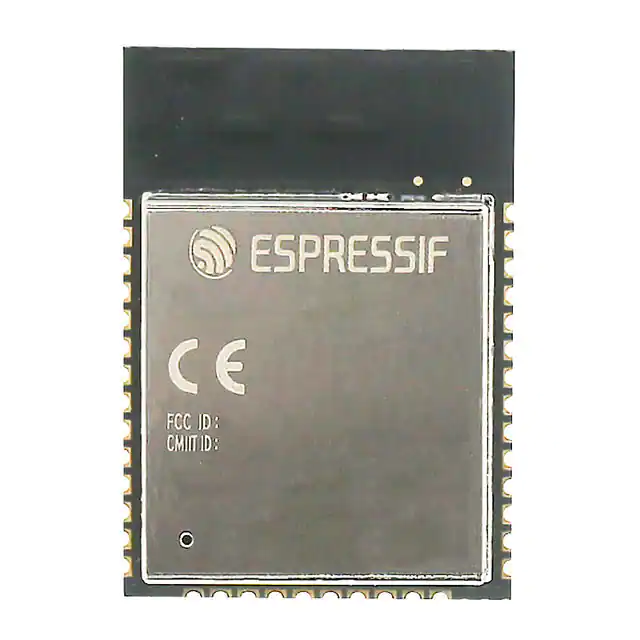
ESP32-WROOM-32E-N4 4MB Wi-Fi Bluetooth Module
ESP32-WROOM-32E-N4 is an Espressif Wi-Fi and Bluetooth module with 4MB Flash, dual-core processing up to 240MHz, a PCB antenna and rich interfaces for IoT, smart devices, controllers and embedded wireless products.
Your reliable partner for semiconductor solutions. Flychip supports customers from R&D to mass production with electronic component supply, BOM sourcing, PCB, SMT and PCBA services.
- 20+
- Years Component Supply
- BOM
- Multi-Part Sourcing
- PCBA
- PCB / SMT Support
- Part No.:
- ESP32-WROOM-32E-N4 4MB Wi-Fi Bluetooth Module
- Manufacturer:
- Espressif Systems
- Category:
- RF Transceiver Modules and Modems
- Package:
- 38-SMD Module
- Description:
- ESP32-WROOM-32E-N4 is an Espressif Wi-Fi and Bluetooth module with 4MB Flash, dual-core processing up to 240MHz, a PCB antenna and rich interfaces for IoT, smart devices, controllers and embedded wireless products.
- Quantity:


-
Quality Control
Supplier review, channel management and product verification before delivery.
-
Global Channels
International chip manufacturer and well-known distributor sourcing network.
-
BOM to Production
Component supply support from R&D prototype to mass production.
-
PCB / SMT / PCBA
Integrated manufacturing support to accelerate product development and delivery.
Product Details
ESP32-WROOM-32E-N4 Guide: 4MB ESP32 Module for IoT Design
ESP32-WROOM-32E-N4 is a practical member of Espressif's classic ESP32-WROOM-32E module family. It combines 4MB of Quad SPI Flash with dual-core processing up to 240MHz, 2.4GHz Wi-Fi, Bluetooth Classic, Bluetooth Low Energy and an integrated PCB antenna. Instead of simply choosing the largest memory configuration, N4 gives engineers a balanced option for IoT products where software size, cost, mature ESP32 support and production stability all matter.
What Is ESP32-WROOM-32E-N4?
Quick answer: ESP32-WROOM-32E-N4 is an Espressif wireless MCU module based on the classic ESP32 architecture. It provides 4MB Quad SPI Flash, dual-core processing up to 240MHz, 2.4GHz Wi-Fi, Bluetooth Classic, Bluetooth Low Energy and an integrated PCB antenna.
The full part number matters because ESP32-WROOM-32E describes a family rather than one single memory configuration. The N4 suffix identifies the 4MB Flash version in the standard temperature category.
For many real embedded products, 4MB Flash is still enough. A wireless temperature sensor, smart switch, MQTT node, serial gateway or compact controller may not need 8MB or 16MB of persistent storage.
This is an important point when comparing ESP32 modules. Larger Flash capacity does not automatically increase CPU performance, Wi-Fi range or GPIO capability. If the software architecture fits comfortably into 4MB, ESP32-WROOM-32E-N4 can remain a technically efficient choice.
The module should also not be confused with a complete ESP32 development board. ESP32-WROOM-32E-N4 is designed to be soldered onto a host PCB. A finished board may add voltage regulation, USB-to-UART programming, reset controls, protection, connectors and application-specific circuitry.
ESP32-WROOM-32E-N4 Specifications
| Parameter | Specification | Engineering Meaning | Selection Note |
|---|---|---|---|
| Ordering Code | ESP32-WROOM-32E-N4 | WROOM-32E module using the N4 memory configuration | Keep the complete suffix in purchasing and production records |
| Flash Memory | 4MB Quad SPI Flash | Stores firmware, partitions, configuration and persistent data | Suitable for many compact ESP32 applications |
| PSRAM | None | Standard N4 does not add a large external runtime-memory pool | Select a PSRAM-equipped configuration when large buffers are required |
| CPU | Dual-core 32-bit Xtensa LX6, up to 240MHz | Supports networking, application logic, control and sensor processing | Larger Flash variants do not automatically provide a faster CPU |
| On-Chip SRAM | 520KB | Working memory for application tasks, networking and temporary data | SRAM and Flash solve different memory requirements |
| Wi-Fi | 2.4GHz IEEE 802.11 b/g/n | Compatible with many common IoT routers and access points | It is not a 5GHz Wi-Fi module |
| Bluetooth | Bluetooth Classic + BLE | Supports both traditional Bluetooth and Bluetooth Low Energy use cases | Useful when legacy Bluetooth compatibility matters |
| Antenna | Integrated PCB antenna | Reduces external RF components in many designs | PCB placement and antenna keepout remain important |
| GPIO Capability | Up to 26 GPIO | Supports sensors, control signals and communication buses | Review boot and special-function pins before PCB routing |
| Supply Voltage | 3.0V to 3.6V | Designed around a regulated 3.3V-class system | Power stability matters during wireless transmission |
| Ambient Range | −40°C to 85°C | Covers many embedded and industrial environments | Check the exact variant when higher temperature is required |
| Module Size | 18.0 × 25.5 × 3.1mm | Compact surface-mount wireless module | Use the recommended footprint and antenna layout |
What Does N4 Mean in ESP32-WROOM-32E-N4?
The N4 suffix identifies a WROOM-32E configuration equipped with 4MB of Quad SPI Flash. The suffix is important because WROOM-32E is available in multiple memory configurations.
N4 should not be interpreted as a lower-speed processor. The main difference compared with N8 or N16 is persistent Flash capacity rather than CPU frequency.
N4
4MB Flash without additional PSRAM. It is a practical configuration for many normal IoT and control applications.
Larger Flash
N8 and N16 configurations provide more persistent storage when firmware, OTA or local files grow.
PSRAM Versions
A PSRAM-equipped version solves runtime-memory problems that larger Flash alone cannot solve.
Production BOMs should therefore use the complete ESP32-WROOM-32E-N4 model rather than only the shorter ESP32-WROOM-32E family name.
Is 4MB Flash Enough for ESP32-WROOM-32E-N4?
For many products, yes. The better engineering question is not whether a larger number looks more attractive. The better question is how much Flash the complete product actually needs.
A compact MQTT sensor can include Wi-Fi networking, encryption, sensor drivers, configuration storage and application logic while still remaining within a carefully planned 4MB architecture.
Smart switches, relay modules, wireless controllers, serial gateways and small local web interfaces can also work effectively within this capacity.
This makes N4 attractive when the project requirements are known. Unused Flash does not improve Wi-Fi range, CPU speed or GPIO capability.
The Real Risk Is Future Software Growth
Firmware rarely stays exactly the same after a product launches. Security libraries may expand. Cloud APIs can become more complex. New certificates, diagnostic tools, languages and configuration options can increase the firmware image.
That means N4 should be selected using measured storage requirements plus realistic future margin. A prototype that only barely fits inside 4MB is not a strong argument for keeping a 4MB production architecture.
ESP32-WROOM-32E-N4 Hardware Profile
The following visual is a specification dashboard rather than a benchmark. It shows the main hardware characteristics that define the N4 configuration.
ESP32-WROOM-32E-N4 CPU and Processing Capability
ESP32-WROOM-32E-N4 uses the mature classic ESP32 architecture with a dual-core 32-bit Xtensa LX6 CPU capable of operating at up to 240MHz.
This point matters when comparing N4, N8 and N16. Increasing Flash capacity does not automatically increase CPU performance. If an application is limited by processing power, selecting N8 or N16 instead of N4 does not directly solve that bottleneck.
For general IoT products, the dual-core design remains useful. Networking, sensor processing, device control, background services and application tasks can operate together on one wireless MCU platform.
The mature ESP32 software ecosystem is another advantage. There are many Arduino libraries, ESP-IDF examples, PlatformIO projects, drivers and existing production designs based on the classic ESP32.
For companies maintaining an established product family, that maturity can save more engineering time than moving to a different MCU only because its specification sheet looks newer.
Wi-Fi and Bluetooth Connectivity
2.4GHz Wi-Fi
ESP32-WROOM-32E-N4 supports IEEE 802.11 b/g/n in the 2.4GHz band. This gives it broad compatibility with IoT routers, embedded access points and common wireless network infrastructure.
It can support MQTT, HTTP, TCP/IP networking, local configuration pages and cloud-connected embedded applications.
Bluetooth Classic and BLE
The classic ESP32 architecture supports Bluetooth BR/EDR as well as Bluetooth Low Energy.
This combination can be useful when a product needs BLE for mobile configuration while maintaining compatibility with older Bluetooth workflows.
A common product design uses Bluetooth for first-time setup and Wi-Fi for normal cloud communication. This can create a convenient local configuration path without requiring a permanent setup access point.
GPIO and Peripheral Options
ESP32-WROOM-32E-N4 provides more than wireless communication. Its peripheral system supports sensors, serial devices, control signals and mixed embedded applications.
Sensor Interfaces
SPI, I2C, ADC and digital GPIO can connect temperature sensors, pressure sensors, meters and external converters.
Control Functions
PWM and GPIO can provide control signals for LEDs, relays, external driver circuits and automation hardware.
Communication
UART, SPI, I2C and other interfaces can connect displays, memories, transceivers and companion MCUs.
GPIO selection should be planned before PCB routing. Not every pin should be treated as a completely unrestricted general-purpose signal because some pins have boot or special-function considerations.
4MB Flash Is Not 4MB RAM
The 4MB figure in ESP32-WROOM-32E-N4 describes Flash storage. It does not mean the device provides 4MB of general runtime RAM.
Flash stores program code and persistent information. Internal SRAM is used while firmware is running.
Flash
Stores firmware, settings, certificates, file-system content and OTA images.
SRAM
Used by tasks, networking stacks, application variables and temporary buffers.
PSRAM
Standard N4 has no external PSRAM. A PSRAM-equipped configuration is better for large runtime buffers.
Therefore, moving from N4 to N8 gives a product more Flash storage but does not automatically fix a runtime-memory problem.
Can ESP32-WROOM-32E-N4 Support OTA Updates?
Yes. A 4MB ESP32 module can support OTA firmware updating, but partition planning is more important than on a larger Flash device.
An OTA architecture may require space for the currently running firmware, another firmware image used during updating and separate areas for settings or file-system data.
When application size grows, available partition margin becomes smaller. This does not make N4 unsuitable for OTA. It means the software team should design the update strategy before production.
ESP32-WROOM-32E-N4 PCB Antenna Design
ESP32-WROOM-32E uses an integrated PCB antenna. This can simplify the BOM because many products do not need an external RF connector or separate antenna.
However, the antenna remains sensitive to its environment. Ground copper, metal enclosures, batteries, displays and nearby conductive structures can influence RF performance.
The antenna end of the module should be treated as an RF design area rather than ordinary PCB space.
Power Supply Design for ESP32-WROOM-32E-N4
ESP32-WROOM-32E-N4 operates from a 3.0V to 3.6V supply range, with 3.3V commonly used in embedded systems.
The regulator must do more than provide the correct average voltage. Wi-Fi activity causes changing current demand, so poor power integrity can produce resets or unstable communication.
The PCB should therefore use suitable regulation, short low-impedance power routing and local decoupling.
Designers should also consider relays, motors, switching converters and other noisy loads that share the system power architecture.
ESP32-WROOM-32E-N4 vs N8 vs N16
| Ordering Code | Flash | PSRAM | Best Selection Logic |
|---|---|---|---|
| ESP32-WROOM-32E-N4 | 4MB | None | Strong option for mainstream ESP32 applications with controlled firmware size |
| ESP32-WROOM-32E-N8 | 8MB | None | Better when firmware, OTA or local files require more persistent storage |
| ESP32-WROOM-32E-N16 | 16MB | None | Useful for larger firmware, local assets and long-term software expansion |
| PSRAM Configuration | Depends on version | Available on selected configurations | Better when runtime buffers rather than persistent storage are the real limitation |
N4 should not automatically be described as the inferior model. If 4MB provides enough capacity, it retains the same general classic ESP32 processing and wireless platform.
ESP32-WROOM-32E-N4 vs N8: Which One Should You Choose?
N4 versus N8 is one of the most practical comparisons because the main difference is persistent Flash capacity.
If firmware, OTA partitions and local storage comfortably fit into 4MB, N4 may provide everything the product needs. Moving to N8 does not automatically improve processor speed or Wi-Fi performance.
N8 becomes more attractive when the product includes a larger embedded website, more certificates, more local assets or a long roadmap of software expansion.
The better rule is: choose N4 using measured storage requirements, and move to N8 when extra Flash creates real lifecycle value.
Best Applications for ESP32-WROOM-32E-N4
Wireless Sensors
Suitable for environmental monitoring, telemetry and compact Wi-Fi sensor products.
Smart Switches
Wi-Fi, Bluetooth and GPIO make N4 useful for connected relays and automation devices.
MQTT Controllers
A strong fit for embedded products exchanging commands and sensor data through MQTT.
Serial Gateways
UART and Wi-Fi can connect existing equipment with modern monitoring platforms.
Smart Appliances
Suitable for compact appliance controllers requiring local logic and wireless connectivity.
Industrial Telemetry
Mature software and flexible interfaces support remote equipment status and monitoring.
When ESP32-WROOM-32E-N4 Is Not the Best Choice
Consider N8 or N16 When
- Firmware already uses most of the 4MB capacity.
- A large local web interface is required.
- OTA and recovery partitions need more space.
- Significant future software expansion is expected.
- Large persistent resources must be stored.
Consider PSRAM When
- Camera frame buffers are required.
- Large graphical buffers are needed.
- Runtime RAM is the main bottleneck.
- Large temporary data structures are used.
- Internal SRAM is repeatedly exhausted.
ESP32-WROOM-32E-N4 Module vs ESP32 Development Board
| Category | ESP32-WROOM-32E-N4 | Typical ESP32 Dev Board | Best Use |
|---|---|---|---|
| Product Form | Surface-mount wireless module | Complete prototyping board | N4 module is better suited to custom production PCBs |
| Flash | 4MB on N4 configuration | Depends on the installed module | Verify the exact module marking |
| USB Programming | Host PCB provides the required programming interface | Commonly includes USB-to-UART hardware | Development boards are easier during early firmware work |
| Power Regulation | Designed into the host PCB | Usually included on the board | Custom design gives more production control |
| Mechanical Size | Compact module footprint | Larger because of headers and support circuitry | Module is better suited to final embedded products |
| Production | Suitable for SMT assembly | Better for laboratory and prototype work | Use each format for the correct development stage |
Arduino, ESP-IDF and PlatformIO Support
ESP32-WROOM-32E-N4 benefits from the mature classic ESP32 software ecosystem. Developers can work with ESP-IDF, Arduino-based frameworks or PlatformIO.
Arduino can be useful for prototypes and applications that rely on its large library ecosystem. PlatformIO provides structured project management and dependency handling. ESP-IDF gives developers direct access to Espressif's official framework and deeper system controls.
For the N4 configuration, Flash and partition settings should match the actual 4MB hardware.
A configuration copied from an 8MB or 16MB project should not be used blindly. Hardware, firmware, production tools and the BOM should agree on the same Flash architecture.
What to Check Before Buying ESP32-WROOM-32E-N4
Production sourcing requires more precision than purchasing a single module for a prototype.
Why N4 Can Be the Smarter Choice Instead of the Smaller Choice
ESP32-WROOM-32E-N4 is sometimes described as simply the smaller Flash version of WROOM-32E. That description misses the real engineering question.
If a product only needs 4MB, unused additional Flash does not improve processing speed, wireless range or GPIO performance.
This is important in volume manufacturing, where every component choice is repeated across thousands of units. Good engineering does not mean choosing the largest specification by default. It means matching hardware resources to the application while keeping enough lifecycle margin.
At the same time, under-sizing Flash can create problems. If firmware already occupies most of the available partition before launch, future updates can become difficult.
The decision should therefore use real measurements: application size, OTA structure, local data, security requirements and expected software growth.
ESP32-WROOM-32E-N4 Selection Matrix
| Project Type | N4 Fit | Main Reason | Important Check |
|---|---|---|---|
| MQTT Sensor Node | Excellent | 4MB is often sufficient for compact networking and sensor firmware | Confirm OTA partition size |
| Smart Switch | Excellent | Wi-Fi, Bluetooth and GPIO fit the workload well | Review relay noise and power design |
| Serial Wi-Fi Gateway | Very Good | Mature UART and networking support | Verify buffer and protocol requirements |
| Compact Web Controller | Very Good | 4MB can support a controlled local web interface | Estimate HTML, CSS and JavaScript size |
| Large Web Dashboard | Conditional | Embedded assets can consume Flash quickly | Consider N8 when storage margin is small |
| Camera Application | Conditional | Standard N4 does not include PSRAM | Evaluate a PSRAM-equipped module |
| Long-Life OTA Product | Conditional | 4MB may become tighter as software grows | Model future firmware size before production |
ESP32-WROOM-32E-N4 FAQ
What is ESP32-WROOM-32E-N4?
ESP32-WROOM-32E-N4 is an Espressif wireless MCU module with 4MB Flash, dual-core classic ESP32 processing, 2.4GHz Wi-Fi, Bluetooth and an integrated PCB antenna.
What does N4 mean in ESP32-WROOM-32E-N4?
N4 identifies the WROOM-32E configuration equipped with 4MB of Quad SPI Flash.
Is 4MB Flash enough for ESP32?
Yes for many sensors, controllers, smart switches and compact IoT applications. OTA and future software growth should still be considered.
Does ESP32-WROOM-32E-N4 have PSRAM?
Standard N4 does not include external PSRAM. A PSRAM-equipped configuration should be selected when the application requires larger runtime buffers.
Does ESP32-WROOM-32E-N4 support Wi-Fi?
Yes. It supports 2.4GHz IEEE 802.11 b/g/n Wi-Fi for common IoT and embedded networks.
Does ESP32-WROOM-32E-N4 support Bluetooth Classic?
Yes. The classic ESP32 platform supports Bluetooth BR/EDR together with Bluetooth Low Energy.
What voltage does ESP32-WROOM-32E-N4 use?
The module uses a 3.0V to 3.6V supply range, with 3.3V commonly used in practical host designs.
What is the operating temperature range?
The standard N4 configuration is intended for an ambient range of approximately −40°C to 85°C.
What is the difference between N4 and N8?
N4 provides 4MB Flash while N8 provides 8MB. The main difference is persistent storage capacity.
Does N8 make the ESP32 faster than N4?
No. Increasing Flash capacity does not automatically increase CPU frequency or Wi-Fi performance.
Can ESP32-WROOM-32E-N4 support OTA updates?
Yes. OTA updating is possible when the firmware and partition structure fit within the available 4MB Flash.
Is ESP32-WROOM-32E-N4 a development board?
No. It is a surface-mount wireless module. A development board adds programming, power and prototype support circuits.
Does ESP32-WROOM-32E-N4 have a built-in antenna?
Yes. ESP32-WROOM-32E uses an integrated PCB antenna, but host PCB placement still affects wireless performance.
When should I choose N8 instead of N4?
Choose N8 when firmware, OTA partitions, embedded web files or future software growth need more storage than 4MB can comfortably provide.
Final ESP32-WROOM-32E-N4 Selection Summary
ESP32-WROOM-32E-N4 remains a practical classic ESP32 module for engineers who need proven wireless connectivity without automatically moving to a larger Flash configuration.
Its core combination includes 4MB Quad SPI Flash, dual-core processing up to 240MHz, 2.4GHz Wi-Fi, Bluetooth Classic, Bluetooth Low Energy, an integrated PCB antenna and a broad set of embedded peripherals.
The important reason to choose N4 is that 4MB can still be enough for many real products. Wireless sensors, MQTT nodes, smart switches, compact gateways and control systems may gain no practical performance benefit simply from installing larger Flash.
However, firmware size should be evaluated together with OTA strategy, local assets and long-term software growth. If future updates leave too little Flash margin, N8 may provide a more sustainable product architecture.
Designers should also separate Flash requirements from runtime-memory requirements. A camera or graphics workload may benefit more from PSRAM than from a larger Flash number.
Finally, module selection is only one part of product reliability. Stable power, correct antenna placement, appropriate GPIO assignment, a matching partition layout and accurate BOM control all influence field performance.
When those factors are planned correctly, ESP32-WROOM-32E-N4 provides a mature, cost-conscious and flexible wireless platform for IoT, automation, monitoring and embedded networking products.
From Component Sourcing to Production Delivery
Flychip has been providing electronic components to global customers for 20 years. We combine component supply, BOM services, PCB, SMT and PCBA support to help customers accelerate product development and delivery.
-
R&D Support
Fast sourcing support for prototype development, sample validation and early-stage engineering needs.
-
BOM Services
Multi-line BOM matching with component supply, alternative suggestions and procurement follow-up.
-
Mass Production
Stable supply coordination for production preparation, batch delivery and long-term purchasing needs.
-
Experienced Team
Over 15 years of channel management, quality control, sales management and organization management experience.
ESP32-WROOM-32E-N4 4MB Wi-Fi Bluetooth Module Technical Information
- Specifications
- FAQ
- Hot Sale
- Related Products
Specifications
- Product Attributes
- Attribute Value
- Manufacturer:
- Espressif Systems
- Series:
- ESP32
- Package/Case:
- 38-SMD Module
- Packaging:
- Tape & Reel (TR)
- Product Status:
- Active
- Programmable:
- Verified
- RF Family/Standard:
- Bluetooth, WiFi
- Protocol:
- 802.11b/g/n, Bluetooth v4.2 +EDR, Class 1, 2 and 3
- Modulation:
- CCK, DSSS, OFDM
- Frequency:
- 2.4GHz ~ 2.5GHz
- Data Rate:
- 150Mbps
- Power - Output:
- 20dBm
- Sensitivity:
- -98dBm
- Serial Interfaces:
- ADC, GPIO, I2C, I2S, PWM, SDIO, SPI, UART
- Antenna Type:
- Integrated, Trace
- Utilized IC / Part:
- ESP32-D0WD-V3
- Memory Size:
- 4MB Flash, 448kB ROM, 536kB SRAM
- Voltage - Supply:
- 3V ~ 3.6V
- Current - Receiving:
- -
- Current - Transmitting:
- -
- Mounting Type:
- Surface Mount
- Operating Temperature:
- -40°C ~ 85°C
FAQ
1. How to order ESP32-WROOM-32E-N4 4MB Wi-Fi Bluetooth Module on Flychip?
You can submit an RFQ directly on this page. Our sales team will review your quantity, delivery requirements and target price, then reply with a quotation as soon as possible.
2. How does Flychip verify the quality of ESP32-WROOM-32E-N4 4MB Wi-Fi Bluetooth Module?
We work with qualified channels including international chip manufacturers and well-known distributors. Our team pays close attention to supplier review, traceability, product condition and quality control.
3. Are the price and inventory of ESP32-WROOM-32E-N4 4MB Wi-Fi Bluetooth Module updated in real time?
Inventory and prices of electronic components may fluctuate frequently. The displayed data is for reference, and the final quotation will be confirmed by our sales team.
4. What payment methods are accepted?
Wire Transfer, PayPal, Alipay, WeChat, Credit Card, Western Union, MoneyGram and Escrow may be supported depending on the order and region.
5. How is shipping arranged?
We can arrange international shipping through DHL, UPS, FedEx, TNT and other logistics channels. Tracking information will be provided after shipment.
6. What is the return or replacement process for ESP32-WROOM-32E-N4 4MB Wi-Fi Bluetooth Module?
Please contact our sales team within the specified period if there are quantity differences, wrong items, or clear external defects. The product should remain unused and in its original packaging.
7. Can I request technical support for ESP32-WROOM-32E-N4 4MB Wi-Fi Bluetooth Module?
Yes. You can contact us for datasheet, package details, pin information and sourcing assistance related to ESP32-WROOM-32E-N4 4MB Wi-Fi Bluetooth Module.
Hot Sale
Related Products
-
-
ESP32-C3FH4
Espressif Systems
-
-
ESP32-S2FH4
Espressif Systems
-
-
ESP32-S2FN4R2
Espressif Systems
-
-
ESP32-C3-MINI-1-N4
Espressif Systems
-
-
ESP32-C3-WROOM-02-N4
Espressif Systems
-
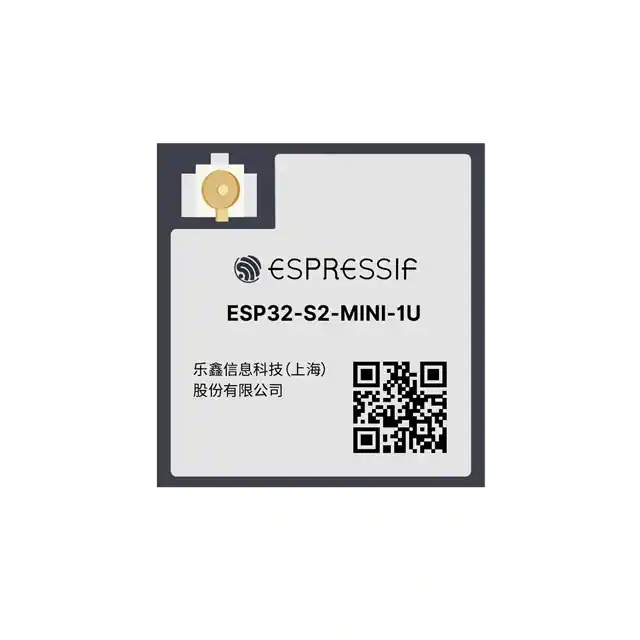
-
ESP32-C3-MINI-1U-N4
Espressif Systems
-
-
ESP32-C3-MINI-1U-H4
Espressif Systems
-
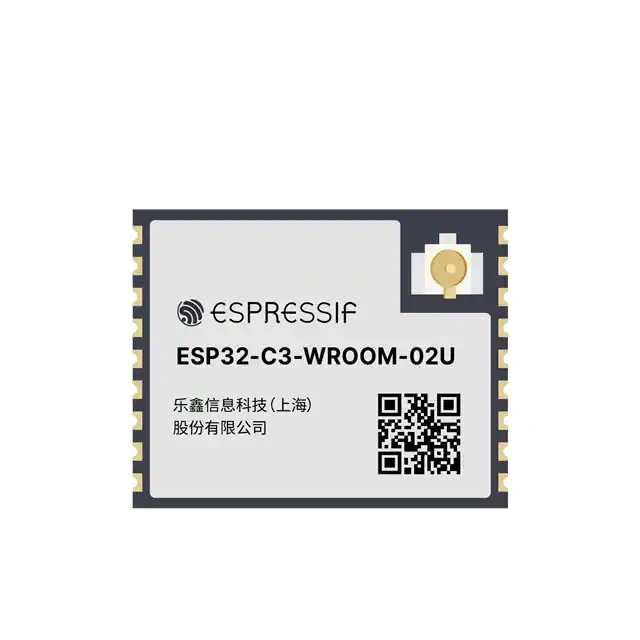
-
ESP32-C3-WROOM-02U-N4
Espressif Systems
-
-
ESP32-H2-MINI-1-N4
Espressif Systems
-
-
ESP32-H2-MINI-1-H4
Espressif Systems
-
_viewa.jpg)
-
ESP32-MINI-1-N4
Espressif Systems
-
-
ESP32-S2-MINI-2-N4R2
Espressif Systems
ESP32-WROOM-32E-N4 4MB Wi-Fi Bluetooth Module Sourcing & Technical Support
ESP32-WROOM-32E-N4 4MB Wi-Fi Bluetooth Module is supplied by Espressif Systems. This page provides key purchasing information including manufacturer, package, datasheet, stock reference, price reference and RFQ support.
As your reliable partner for semiconductor solutions, Flychip supports customers from research and development to mass production with electronic component supply, BOM sourcing, PCB, SMT and PCBA solutions.
Our sourcing partners include international chip manufacturers and well-known distributors. With rich experience in channel management, quality control and sales management, Flychip helps customers accelerate product development and delivery.
- Part Number
- ESP32-WROOM-32E-N4 4MB Wi-Fi Bluetooth Module
- Manufacturer
- Espressif Systems
- Package
- 38-SMD Module
- Category
- RF Transceiver Modules and Modems
Quick RFQ Send your inquiry and our sales team will respond quickly.
Tips
Please check your information and try again.