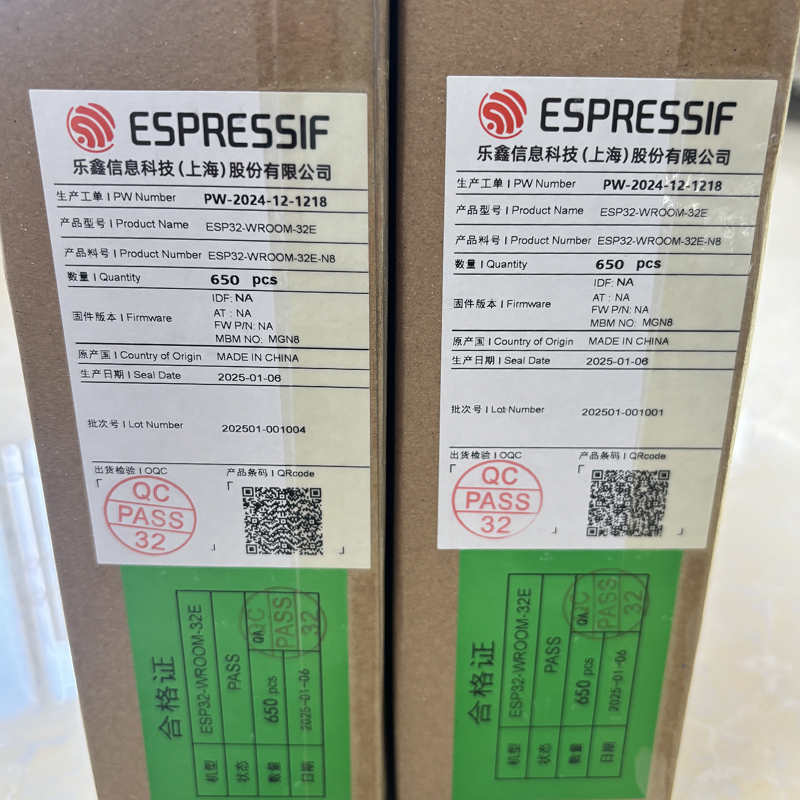
ESP32-WROOM-32E-N8 8MB Wi-Fi Bluetooth Module
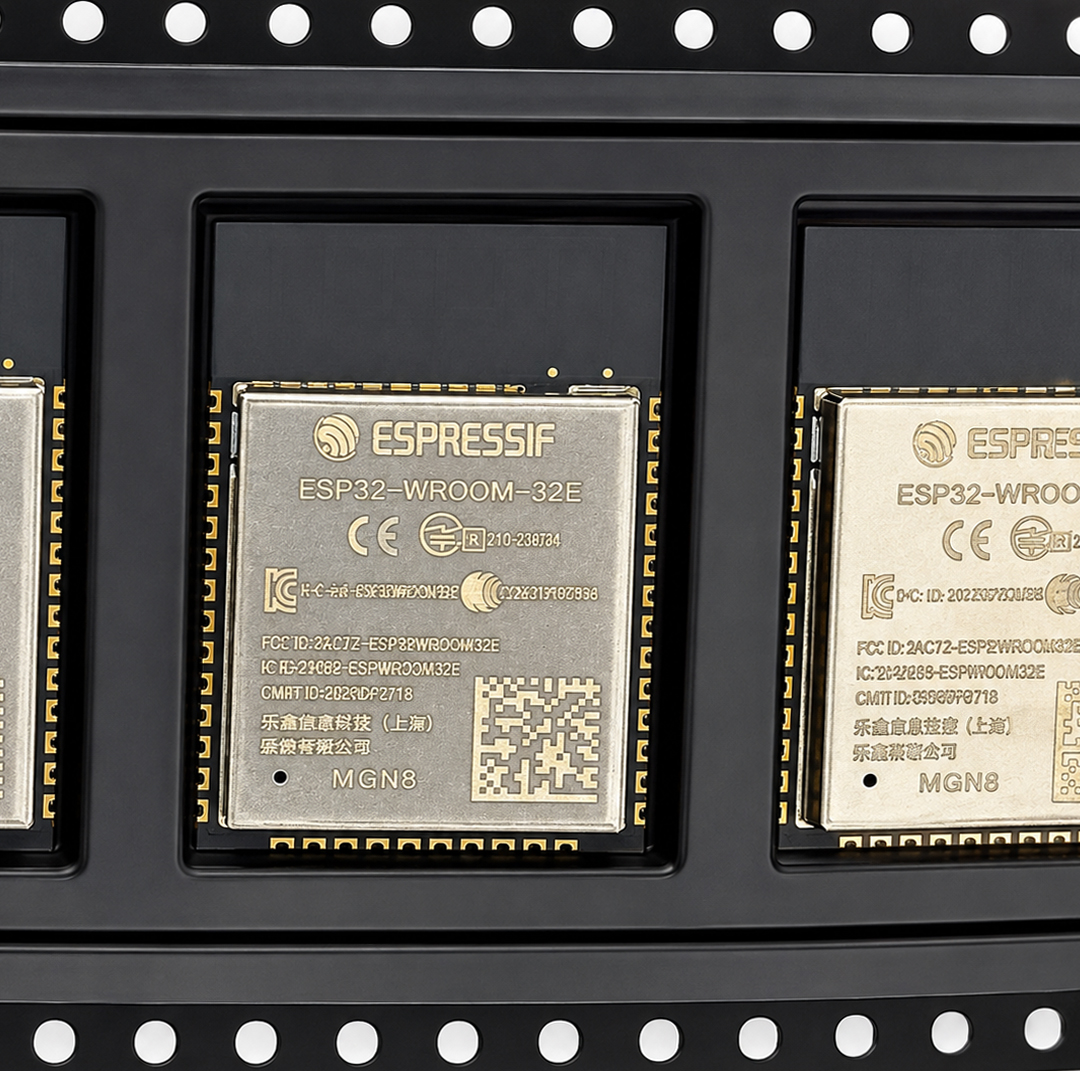
ESP32-WROOM-32E-N8 is an Espressif Wi-Fi and Bluetooth module with 8MB Flash, dual-core processing up to 240MHz, an integrated PCB antenna and rich interfaces for IoT, smart control, gateways and embedded wireless products.
Your reliable partner for semiconductor solutions. Flychip supports customers from R&D to mass production with electronic component supply, BOM sourcing, PCB, SMT and PCBA services.
- 20+
- Years Component Supply
- BOM
- Multi-Part Sourcing
- PCBA
- PCB / SMT Support
- Part No.:
- ESP32-WROOM-32E-N8 8MB Wi-Fi Bluetooth Module
- Manufacturer:
- Espressif Systems
- Category:
- RF Transceiver Modules and Modems
- Package:
- 38-SMD Module
- Description:
- ESP32-WROOM-32E-N8 is an Espressif Wi-Fi and Bluetooth module with 8MB Flash, dual-core processing up to 240MHz, an integrated PCB antenna and rich interfaces for IoT, smart control, gateways and embedded wireless products.
- Quantity:


-
Quality Control
Supplier review, channel management and product verification before delivery.
-
Global Channels
International chip manufacturer and well-known distributor sourcing network.
-
BOM to Production
Component supply support from R&D prototype to mass production.
-
PCB / SMT / PCBA
Integrated manufacturing support to accelerate product development and delivery.
Product Details
ESP32-WROOM-32E-N8 Guide: 8MB ESP32 Module for IoT Design
The ESP32-WROOM-32E-N8 is an Espressif wireless MCU module built for embedded products that need reliable 2.4GHz Wi-Fi, Bluetooth connectivity, a mature ESP32 software ecosystem and more Flash space than a basic 4MB configuration. Its 8MB Flash makes it especially interesting for connected devices that require larger firmware, web assets, file storage or flexible OTA partition planning.
What Is ESP32-WROOM-32E-N8?
Quick answer: ESP32-WROOM-32E-N8 is a classic ESP32 wireless module with 8MB of Quad SPI Flash, an integrated PCB antenna, dual-core processing up to 240MHz, 2.4GHz Wi-Fi, Bluetooth Classic and Bluetooth Low Energy. The N8 ordering code identifies the standard-temperature 8MB Flash version without PSRAM.
It is important to understand that ESP32-WROOM-32E-N8 is a module, not a complete USB development board. The metal-shielded module is designed to be soldered onto a host PCB. A finished development board may place the module together with a voltage regulator, USB-to-UART bridge, reset circuit, boot buttons, LEDs and pin headers.
That distinction matters when comparing prices or choosing parts for production. A low-cost ESP32 development board and an ESP32-WROOM-32E-N8 module may use the same ESP32 family, but they serve different engineering stages. The development board is convenient for firmware testing. The module is the component that normally becomes part of the final product.
The N8 version is especially useful when a design needs more non-volatile storage than a common 4MB ESP32 module but does not require external PSRAM. This makes it a practical middle position in the WROOM-32E family rather than simply a larger-memory version of the same product.
ESP32-WROOM-32E-N8 Specifications
| Parameter | ESP32-WROOM-32E-N8 Specification | Engineering Meaning | Buying Note |
|---|---|---|---|
| Ordering Code | ESP32-WROOM-32E-N8 | WROOM-32E module with standard temperature range and 8MB Flash | Verify the full suffix, not only "ESP32-WROOM-32E" |
| CPU | Dual-core 32-bit Xtensa LX6, up to 240MHz | Strong performance for networking, control and general embedded workloads | Still useful when compatibility with classic ESP32 software matters |
| Flash | 8MB Quad SPI Flash | Stores firmware, partitions, files, web pages and other persistent data | N8 does not mean 8MB of working RAM |
| PSRAM | None on the N8 ordering code | Large runtime image buffers and graphics buffers have less memory headroom | Consider N8R2 or another PSRAM-equipped option when required |
| SRAM | 520KB on-chip SRAM | Working memory for firmware tasks, network stacks and application data | Flash capacity and SRAM capacity solve different problems |
| Wi-Fi | 2.4GHz 802.11 b/g/n | Suitable for common routers, IoT access points and local wireless networks | It is not a 5GHz Wi-Fi module |
| Bluetooth | Bluetooth 4.2 BR/EDR + BLE | Supports Bluetooth Classic as well as Bluetooth Low Energy applications | A useful reason to retain classic ESP32 in some legacy designs |
| Antenna | Integrated PCB antenna | No external antenna connector is required in a normal design | Host-PCB placement still strongly affects RF performance |
| Supply | 3.0V to 3.6V | Designed around a regulated 3.3V power rail | Power integrity is important during wireless transmit bursts |
| Temperature | −40°C to 85°C ambient | Suitable for many industrial and embedded environments | Do not confuse N8 with the high-temperature H8 ordering code |
| Dimensions | 18.0 × 25.5 × 3.1mm | Compact shielded module footprint for embedded PCB designs | Follow the official land pattern and antenna keepout guidance |
| Module Pins | 38 module pins | Provides power, control and a rich set of peripheral connections | Not every pin is a general-purpose GPIO |
What Does N8 Mean in ESP32-WROOM-32E-N8?
The suffix is one of the most useful parts of the product name. In ESP32-WROOM-32E-N8, the N8 identifies the standard-temperature configuration with 8MB of Quad SPI Flash.
This sounds simple, but it prevents a common purchasing mistake. Search results often shorten module names to "ESP32-WROOM-32E," even though several memory and temperature combinations exist. Two modules with the same WROOM-32E family name can therefore have different Flash capacity or PSRAM configuration.
N8
8MB Flash, standard −40°C to 85°C ambient range and no PSRAM in this exact ordering code.
N8R2
A different configuration that combines 8MB Flash with 2MB PSRAM. It should not be treated as identical to N8.
H8
An 8MB Flash option intended for a higher ambient-temperature range. The suffix affects qualification as well as memory.
For purchasing, BOM control and replacement planning, the complete ordering code should be recorded. Writing only "ESP32-WROOM-32E" on an internal parts list leaves room for an incorrect memory or temperature version to enter production.
Why 8MB Flash Matters More Than It First Appears
The main reason to choose ESP32-WROOM-32E-N8 over a 4MB version is not raw processor speed. Both modules can use the same classic ESP32 processing architecture. The important difference is how much non-volatile storage the system designer can divide among firmware, OTA images, file systems, calibration data and application assets.
A simple sensor node may fit comfortably into a small application partition. In that case, 8MB can appear unnecessary. The situation changes when firmware grows over several product generations. TLS libraries, web interfaces, language files, fonts, audio clips, configuration pages and local data storage can consume Flash faster than expected.
OTA updating is another practical reason. A robust over-the-air update design may need space for the currently running firmware and a second firmware image. The device can download the new image into the inactive partition, validate it and then switch boot targets. Larger Flash gives the engineer more freedom when creating that partition table.
This is why the N8 version can be excellent for a feature-rich connected controller but less suitable for a camera application that requires very large frame buffers. The first workload wants storage capacity. The second may want PSRAM. Those are different engineering requirements.
ESP32-WROOM-32E-N8 Parameter Profile
The following visual is a specification-oriented dashboard rather than a synthetic performance benchmark. It highlights the main characteristics that define where the N8 version fits in an embedded design.
CPU, Wi-Fi and Bluetooth Capability
Dual-Core Classic ESP32 Processing
ESP32-WROOM-32E-N8 uses the classic ESP32 architecture with two 32-bit Xtensa LX6 CPU cores and a maximum clock frequency of 240MHz. This remains a useful level of processing power for embedded networking, protocol conversion, device control, sensor processing and local web interfaces.
One advantage of a mature dual-core ESP32 platform is that many real products already have tested firmware patterns for separating communication work from application tasks. A developer can, for example, keep networking and system services responsive while the other processing resources handle control logic or user functions.
2.4GHz Wi-Fi
The module supports 802.11 b/g/n Wi-Fi in the 2.4GHz band. This matches the frequency range widely used by routers, industrial access points and IoT gateways. For products such as smart controllers, wireless sensors and local HTTP or MQTT devices, 2.4GHz also offers practical range and broad infrastructure compatibility.
Bluetooth Classic and BLE
A less obvious reason to choose the ESP32-WROOM-32E-N8 is its Bluetooth combination. It supports both Bluetooth BR/EDR, commonly called Bluetooth Classic, and Bluetooth Low Energy.
That can matter when maintaining an older product or integrating with equipment that still depends on classic Bluetooth profiles or classic ESP32 software. Newer does not always mean more compatible. If an existing application was designed around Bluetooth Classic, changing to a newer ESP32 family that focuses only on BLE can create unnecessary firmware work.
GPIO and Peripheral Options
The ESP32-WROOM-32E platform provides a broad embedded peripheral set, including GPIO, UART, SPI, I2C, I2S, PWM, ADC, DAC, touch functions, pulse counting and other controller interfaces. This range is one reason the classic ESP32 became popular as both a networking processor and a general embedded controller.
Sensor Interfaces
I2C, SPI, ADC and general-purpose digital I/O make the module suitable for temperature sensors, pressure sensors, IMUs, metering devices and mixed-signal monitoring systems.
Control Interfaces
PWM, GPIO and serial interfaces allow the ESP32 to control relays, indicators, actuators and external driver circuits when the surrounding hardware is designed correctly.
Communication Interfaces
UART, SPI and I2C make it practical to connect external MCUs, displays, converters, memories and industrial interface transceivers.
The module has 38 pins, but that number should not be interpreted as 38 freely usable GPIOs. Some pads are power or ground, some positions are not connected, and several GPIOs have boot or peripheral functions that must be considered during schematic design.
PCB Antenna Placement Can Matter More Than 8MB Flash
ESP32-WROOM-32E uses an integrated PCB antenna. This simplifies the BOM because the host product does not need a separate RF connector and external antenna for normal operation.
However, integrating the antenna does not remove RF design responsibility. The surrounding host PCB, enclosure, battery, display frame, metal bracket and wiring can all affect the radio environment.
A useful design rule is to treat the antenna end of the module as an RF area rather than ordinary PCB space. The official land pattern includes an antenna keepout region, and the host design should avoid placing copper or large conductive objects where they can detune or shield the antenna.
If the product must place its radio inside a difficult metal enclosure or needs a remotely positioned antenna, ESP32-WROOM-32UE may be more appropriate because that family uses an external antenna connector rather than the integrated WROOM-32E PCB antenna.
Power Supply Design for ESP32-WROOM-32E-N8
The specified supply range is 3.0V to 3.6V, with 3.3V normally used as the design target. A common mistake is to focus only on the nominal voltage while ignoring the transient behavior of the supply.
Wireless transmit activity can create changing current demand. If the regulator, PCB trace or decoupling network is weak, the supply rail can dip even though a multimeter shows an apparently correct average voltage. Symptoms may appear as unexpected resets, unstable Wi-Fi connections or failures that happen only during radio activity.
For a production PCB, power integrity should therefore be treated as a system requirement. Use an appropriate regulator, short low-impedance power paths and decoupling placed according to the hardware design guidance. The objective is not simply to deliver "3.3V," but to maintain a clean 3.3V rail during the module's changing workload.
This is especially important when the ESP32 shares power with relays, motors, displays or other loads that create electrical noise. Separating noisy loads and planning grounding carefully can improve reliability more than changing firmware settings.
ESP32-WROOM-32E-N8 Module vs ESP32 Development Board
| Item | ESP32-WROOM-32E-N8 Module | Typical ESP32 Development Board | Best Stage |
|---|---|---|---|
| Product Form | Shielded RF module for PCB assembly | Ready-to-use board with supporting circuits | Module: product integration |
| USB Interface | No complete USB programming circuit by itself | Often includes USB-to-UART hardware | Development board: rapid firmware testing |
| Power | Requires a properly designed host power supply | Usually includes onboard regulation | Module: custom PCB design |
| Size | Compact 18 × 25.5mm module footprint | Larger because of USB, regulator and headers | Module: final embedded products |
| Production | Suitable for automated PCB assembly | Better suited to prototypes and laboratory use | Choose according to project phase |
A practical development workflow often uses both. Engineers can begin firmware work on a known development board, then move to a custom PCB containing ESP32-WROOM-32E-N8 once the hardware architecture is stable.
Best Applications for ESP32-WROOM-32E-N8
IoT Controllers
Good for Wi-Fi connected controllers that combine sensors, relays, local logic, MQTT, HTTP and cloud communication.
Wireless Gateways
Useful for compact products that translate UART, SPI or sensor data into Wi-Fi or Bluetooth communication.
Smart Home Devices
Suitable for connected switches, environmental monitors, appliance controllers and local automation endpoints.
Industrial Telemetry
A strong fit for equipment monitoring where wireless connectivity and a mature ESP32 firmware stack are important.
Embedded Web Interfaces
The 8MB Flash configuration provides useful room for firmware together with HTML, CSS, JavaScript and device configuration assets.
Bluetooth Products
Especially relevant when the application needs both BLE and classic Bluetooth compatibility from the same ESP32 platform.
When ESP32-WROOM-32E-N8 Is Not the Best Choice
No module should be selected only because it is popular. ESP32-WROOM-32E-N8 is strong for general connected embedded systems, but several workloads may justify another option.
Choose Another Module If You Need
- Large camera frame buffers
- Heavy graphical interfaces requiring large PSRAM
- 5GHz Wi-Fi
- An external antenna connector
- Very high multimedia performance
- A newer architecture specifically required by the application
N8 Is Strong When You Need
- 8MB of persistent Flash storage
- Mature classic ESP32 compatibility
- Wi-Fi and Bluetooth in one module
- Bluetooth Classic plus BLE
- Integrated PCB antenna
- A well-established software ecosystem
The absence of PSRAM deserves special attention. An application with modest runtime memory needs but large firmware can be an excellent match for N8. An application with small firmware but huge image buffers may be the opposite. Engineers should therefore separate Flash requirements from working-memory requirements before selecting the ordering code.
ESP32-WROOM-32E-N4 vs N8 vs N16 vs N8R2
| Ordering Code | Flash | PSRAM | Ambient Range | Best Selection Logic |
|---|---|---|---|---|
| ESP32-WROOM-32E-N4 | 4MB | None | −40 to 85°C | Basic firmware where 4MB provides enough partition space |
| ESP32-WROOM-32E-N8 | 8MB | None | −40 to 85°C | Balanced option for larger firmware, OTA and local assets |
| ESP32-WROOM-32E-N16 | 16MB | None | −40 to 85°C | Choose when persistent storage requirements are significantly larger |
| ESP32-WROOM-32E-N8R2 | 8MB | 2MB | −40 to 85°C | Better when runtime buffers need additional PSRAM |
| ESP32-WROOM-32E-H8 | 8MB | None | −40 to 105°C | Consider when the required ambient-temperature ceiling is higher |
For many connected controllers, N8 is a practical middle configuration. It doubles the Flash capacity of N4 without automatically moving to the largest N16 option. The correct choice still depends on the firmware partition plan rather than a simple "more memory is always better" rule.
ESP32-WROOM-32E-N8 vs ESP32-WROOM-32UE
The important difference between WROOM-32E and WROOM-32UE is the antenna implementation. WROOM-32E uses an onboard PCB antenna. WROOM-32UE is intended for use with an external antenna through its connector.
For a plastic enclosure with good antenna clearance, the integrated antenna of ESP32-WROOM-32E-N8 keeps the BOM simple and avoids an RF cable or external antenna component.
An external-antenna version becomes more attractive when the product is installed inside a metal housing, mounted inside machinery or placed where the antenna must be physically separated from the main PCB.
Arduino, ESP-IDF and PlatformIO Support
ESP32-WROOM-32E-N8 benefits from the long-established classic ESP32 software ecosystem. Developers can build applications with Espressif ESP-IDF, Arduino-based frameworks or development environments such as PlatformIO.
For professional product development, ESP-IDF provides direct access to Espressif's framework, system configuration, networking components and build tools. Arduino can be attractive for fast prototypes or projects that depend on the large Arduino library ecosystem.
PlatformIO provides another workflow layer for developers who prefer project-based configuration, dependency management and integration with common code editors.
The important point for the N8 model is memory configuration. Firmware tools and partition tables should reflect the actual 8MB Flash capacity. Selecting a generic board configuration that assumes 4MB can leave part of the available Flash unused. At the other extreme, configuring a partition layout larger than the installed Flash will create obvious deployment problems.
Production firmware should therefore treat the exact ESP32-WROOM-32E-N8 memory configuration as part of the hardware definition rather than relying on a vague "ESP32" project profile.
What to Check Before Buying ESP32-WROOM-32E-N8
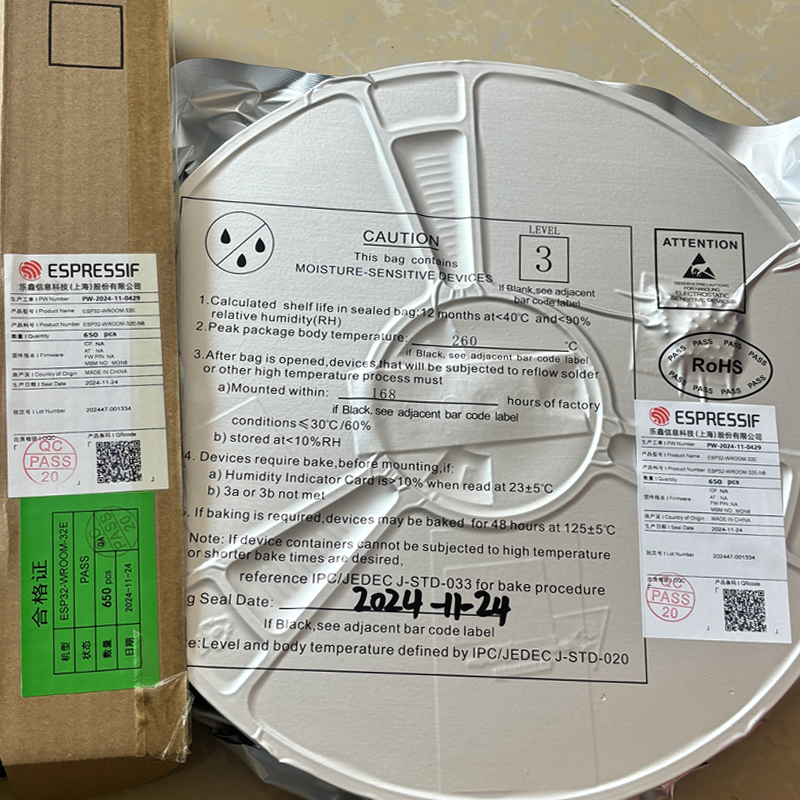
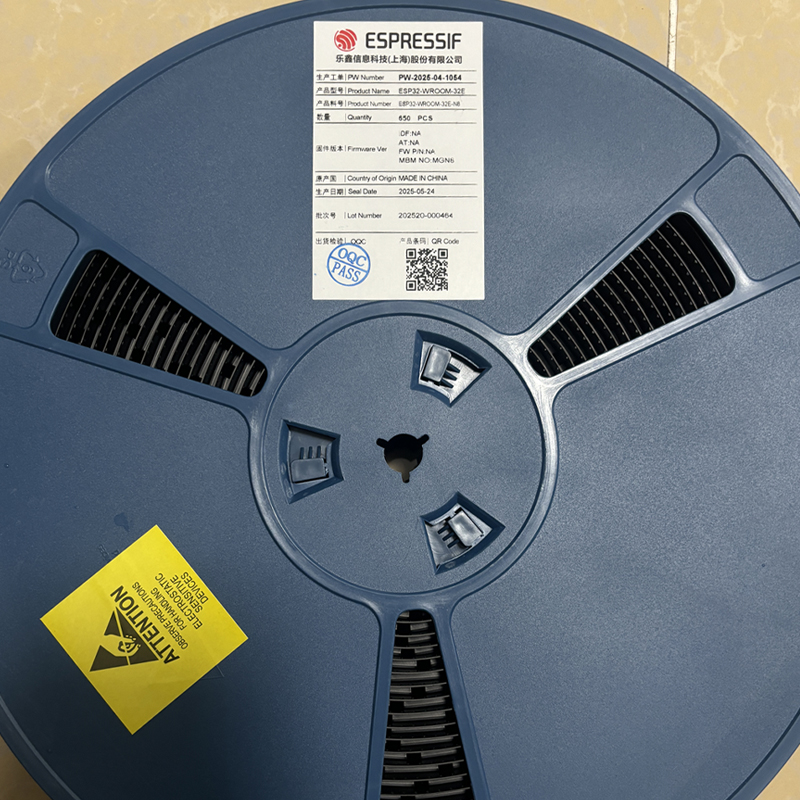
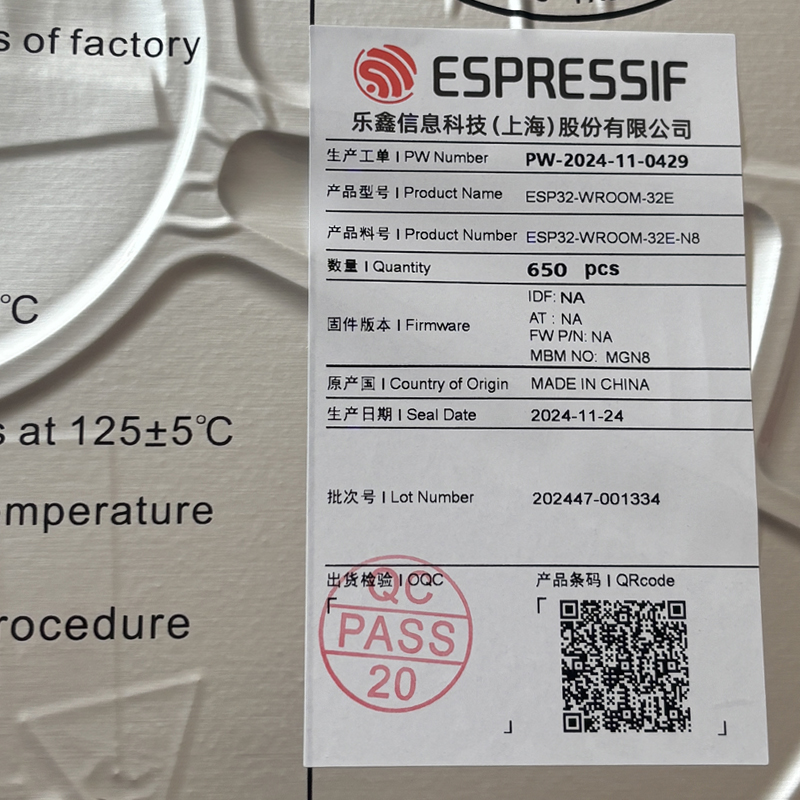
Buying a module for production requires more care than buying one development board for a weekend prototype. The complete ordering code, marking, packaging and traceability can affect assembly and long-term BOM stability.
Production Design Insight: Select the Module as Part of a System
The most useful way to evaluate ESP32-WROOM-32E-N8 is to stop viewing it as an isolated processor specification. In a production device, the module interacts with the power supply, antenna environment, firmware partition table, enclosure, peripheral voltage levels, manufacturing process and cloud architecture.
This explains why two products using the same ESP32-WROOM-32E-N8 can behave very differently in the field. One design may have excellent wireless range and years of stable OTA updates. Another may suffer from resets, weak RF performance or insufficient update space even though the module itself is identical.
The difference is usually system engineering. Stable power improves radio reliability. Correct antenna placement improves link quality. A sensible partition plan makes the 8MB Flash genuinely useful. Clear BOM control prevents an N4 or N8R2 variant from being substituted accidentally.
For this reason, the best purchasing question is not simply "Is ESP32-WROOM-32E-N8 good?" The better question is: Does the 8MB, non-PSRAM, integrated-antenna classic ESP32 architecture match the memory, RF, software and lifecycle requirements of this product?
Who Should Choose ESP32-WROOM-32E-N8?
| Project Type | Fit | Why | Important Check |
|---|---|---|---|
| MQTT Sensor Gateway | Excellent | Strong Wi-Fi ecosystem, useful peripheral set and generous Flash for firmware | Power quality and antenna placement |
| Smart Controller | Excellent | Wi-Fi, Bluetooth, GPIO and mature software support in one module | Confirm I/O requirements and boot-pin use |
| Embedded Web UI | Very Good | 8MB Flash provides extra space for web assets and OTA planning | Separate Flash needs from RAM needs |
| Bluetooth Legacy Product | Very Good | Bluetooth Classic plus BLE can simplify compatibility with older designs | Confirm profile and software requirements |
| Camera / Large Framebuffer | Conditional | The N8 version has no PSRAM | Consider a PSRAM-equipped ESP32 module |
| Metal Enclosure Product | Conditional | Integrated PCB antenna may be difficult to position effectively | Evaluate WROOM-32UE or antenna architecture |
ESP32-WROOM-32E-N8 FAQ
What is ESP32-WROOM-32E-N8?
ESP32-WROOM-32E-N8 is an Espressif classic ESP32 wireless MCU module with 8MB Quad SPI Flash, an integrated PCB antenna, dual-core processing, 2.4GHz Wi-Fi and Bluetooth connectivity.
What does N8 mean in ESP32-WROOM-32E-N8?
N8 identifies the standard-temperature WROOM-32E configuration with 8MB of Quad SPI Flash. It should not be confused with N8R2, which adds 2MB PSRAM.
Does ESP32-WROOM-32E-N8 have 8MB RAM?
No. The 8MB value refers to external Flash storage. The module has on-chip SRAM for runtime operation, but the N8 ordering code does not include PSRAM.
Does ESP32-WROOM-32E-N8 have PSRAM?
No. The standard ESP32-WROOM-32E-N8 ordering code has 8MB Flash without PSRAM. If PSRAM is required, evaluate a PSRAM-equipped configuration such as N8R2 or another suitable module.
Does ESP32-WROOM-32E-N8 support Bluetooth Classic?
Yes. The classic ESP32 architecture supports Bluetooth 4.2 BR/EDR as well as Bluetooth Low Energy, making the module useful for applications that still depend on Bluetooth Classic.
What Wi-Fi does ESP32-WROOM-32E-N8 support?
It supports 2.4GHz IEEE 802.11 b/g/n Wi-Fi. It is intended for 2.4GHz networks and does not provide 5GHz Wi-Fi.
What voltage does ESP32-WROOM-32E-N8 use?
The specified module supply range is 3.0V to 3.6V, with 3.3V commonly used in practical designs. The host PCB should provide a stable supply suitable for wireless current changes.
What is the ESP32-WROOM-32E-N8 temperature range?
The N8 configuration is specified for an ambient operating range of −40°C to 85°C. Higher-temperature WROOM-32E variants use different ordering codes.
What is the difference between N4 and N8?
The main difference is Flash capacity. N4 has 4MB while N8 has 8MB. N8 provides more room for firmware, OTA partitions, file systems and embedded web assets.
What is the difference between N8 and N8R2?
Both configurations have 8MB Flash, but N8R2 adds 2MB PSRAM. N8 does not include PSRAM, so the two ordering codes should not be treated as interchangeable in memory-heavy applications.
Is ESP32-WROOM-32E-N8 a development board?
No. It is a surface-mount wireless module intended to be integrated onto a host PCB. A development board adds power regulation, programming hardware, buttons, connectors and other support circuits.
Is ESP32-WROOM-32E-N8 good for IoT products?
Yes. It is a strong option for IoT controllers, wireless sensors, gateways, automation devices and embedded web products when 2.4GHz Wi-Fi, Bluetooth and 8MB Flash match the application requirements.
Final ESP32-WROOM-32E-N8 Selection Summary
ESP32-WROOM-32E-N8 is best understood as a mature classic ESP32 module with a useful 8MB Flash configuration rather than as a generic "ESP32 with more memory." Its real strengths are the combination of dual-core processing up to 240MHz, 2.4GHz Wi-Fi, Bluetooth Classic, BLE, an integrated PCB antenna, rich peripherals and enough Flash capacity for larger firmware and flexible partition planning.
The most important limitation is equally clear: N8 has no PSRAM. Designers should therefore choose it when they need additional persistent storage, not when their main problem is large runtime buffers.
For IoT gateways, smart controllers, industrial telemetry, wireless interfaces and products built around the mature classic ESP32 ecosystem, ESP32-WROOM-32E-N8 remains a practical and technically balanced module. For camera-heavy systems, large graphical interfaces, external-antenna installations or very different multimedia workloads, another ESP32 configuration may be the better engineering choice.
The best result comes from treating the module, power system, antenna layout, firmware memory map and production BOM as one design. That system-level view is more valuable than choosing a module only by CPU frequency or Flash number.
From Component Sourcing to Production Delivery
Flychip has been providing electronic components to global customers for 20 years. We combine component supply, BOM services, PCB, SMT and PCBA support to help customers accelerate product development and delivery.
-
R&D Support
Fast sourcing support for prototype development, sample validation and early-stage engineering needs.
-
BOM Services
Multi-line BOM matching with component supply, alternative suggestions and procurement follow-up.
-
Mass Production
Stable supply coordination for production preparation, batch delivery and long-term purchasing needs.
-
Experienced Team
Over 15 years of channel management, quality control, sales management and organization management experience.
ESP32-WROOM-32E-N8 8MB Wi-Fi Bluetooth Module Technical Information
- Specifications
- FAQ
- Hot Sale
- Related Products
Specifications
- Product Attributes
- Attribute Value
- Manufacturer:
- Espressif Systems
- Series:
- ESP32
- Package/Case:
- 38-SMD Module
- Packaging:
- Tape & Reel (TR)
- Product Status:
- Active
- Programmable:
- Not Verified
- RF Family/Standard:
- Bluetooth, WiFi
- Protocol:
- 802.11b/g/n, Bluetooth v4.2 +EDR, Class 1, 2 and 3
- Modulation:
- CCK, DSSS, OFDM
- Frequency:
- 2.4GHz ~ 2.5GHz
- Data Rate:
- 150Mbps
- Power - Output:
- 20dBm
- Sensitivity:
- -98dBm
- Serial Interfaces:
- ADC, GPIO, I2C, I2S, PWM, SDIO, SPI, UART
- Antenna Type:
- PCB Trace
- Utilized IC / Part:
- ESP32-D0WD-V3
- Memory Size:
- 8MB Flash, 448kB ROM, 536kB SRAM
- Voltage - Supply:
- 3V ~ 3.6V
- Current - Receiving:
- -
- Current - Transmitting:
- -
- Mounting Type:
- Surface Mount
- Operating Temperature:
- -40°C ~ 85°C
FAQ
1. How to order ESP32-WROOM-32E-N8 8MB Wi-Fi Bluetooth Module on Flychip?
You can submit an RFQ directly on this page. Our sales team will review your quantity, delivery requirements and target price, then reply with a quotation as soon as possible.
2. How does Flychip verify the quality of ESP32-WROOM-32E-N8 8MB Wi-Fi Bluetooth Module?
We work with qualified channels including international chip manufacturers and well-known distributors. Our team pays close attention to supplier review, traceability, product condition and quality control.
3. Are the price and inventory of ESP32-WROOM-32E-N8 8MB Wi-Fi Bluetooth Module updated in real time?
Inventory and prices of electronic components may fluctuate frequently. The displayed data is for reference, and the final quotation will be confirmed by our sales team.
4. What payment methods are accepted?
Wire Transfer, PayPal, Alipay, WeChat, Credit Card, Western Union, MoneyGram and Escrow may be supported depending on the order and region.
5. How is shipping arranged?
We can arrange international shipping through DHL, UPS, FedEx, TNT and other logistics channels. Tracking information will be provided after shipment.
6. What is the return or replacement process for ESP32-WROOM-32E-N8 8MB Wi-Fi Bluetooth Module?
Please contact our sales team within the specified period if there are quantity differences, wrong items, or clear external defects. The product should remain unused and in its original packaging.
7. Can I request technical support for ESP32-WROOM-32E-N8 8MB Wi-Fi Bluetooth Module?
Yes. You can contact us for datasheet, package details, pin information and sourcing assistance related to ESP32-WROOM-32E-N8 8MB Wi-Fi Bluetooth Module.
Hot Sale
Related Products
-
-
ESP32-C3FH4
Espressif Systems
-
-
ESP32-S2FH4
Espressif Systems
-
-
ESP32-S2FN4R2
Espressif Systems
-
-
ESP32-C3-MINI-1-N4
Espressif Systems
-
-
ESP32-C3-WROOM-02-N4
Espressif Systems
-
-
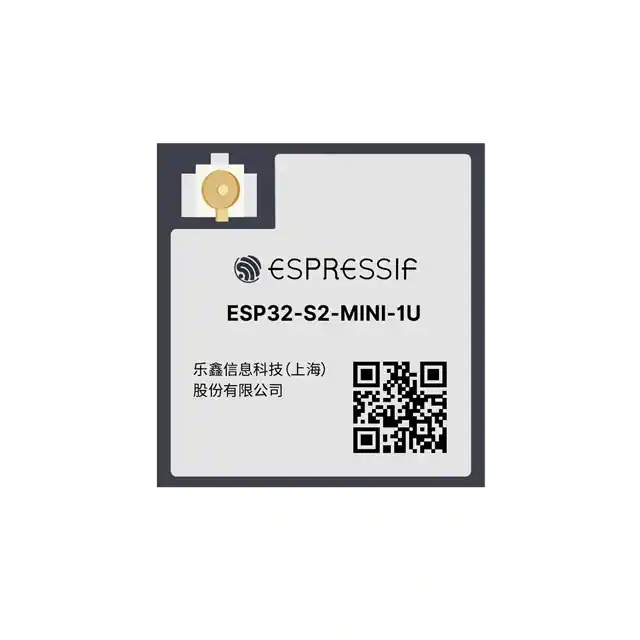
ESP32-C3-MINI-1U-N4
Espressif Systems
-
-
ESP32-C3-MINI-1U-H4
Espressif Systems
-
-
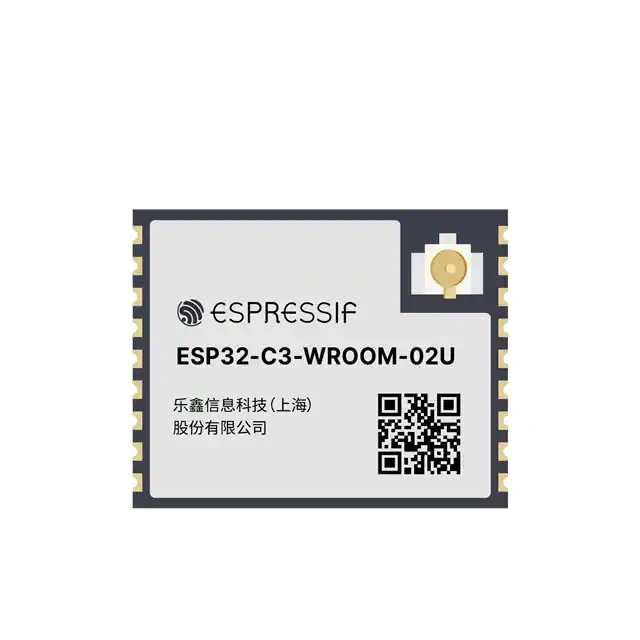
ESP32-C3-WROOM-02U-N4
Espressif Systems
-
-
ESP32-H2-MINI-1-N4
Espressif Systems
-
-
ESP32-H2-MINI-1-H4
Espressif Systems
-
_viewa.jpg)
-
ESP32-MINI-1-N4
Espressif Systems
-
-
ESP32-S2-MINI-2-N4R2
Espressif Systems
ESP32-WROOM-32E-N8 8MB Wi-Fi Bluetooth Module Sourcing & Technical Support
ESP32-WROOM-32E-N8 8MB Wi-Fi Bluetooth Module is supplied by Espressif Systems. This page provides key purchasing information including manufacturer, package, datasheet, stock reference, price reference and RFQ support.
As your reliable partner for semiconductor solutions, Flychip supports customers from research and development to mass production with electronic component supply, BOM sourcing, PCB, SMT and PCBA solutions.
Our sourcing partners include international chip manufacturers and well-known distributors. With rich experience in channel management, quality control and sales management, Flychip helps customers accelerate product development and delivery.
- Part Number
- ESP32-WROOM-32E-N8 8MB Wi-Fi Bluetooth Module
- Manufacturer
- Espressif Systems
- Package
- 38-SMD Module
- Category
- RF Transceiver Modules and Modems
Quick RFQ Send your inquiry and our sales team will respond quickly.
Tips
Please check your information and try again.