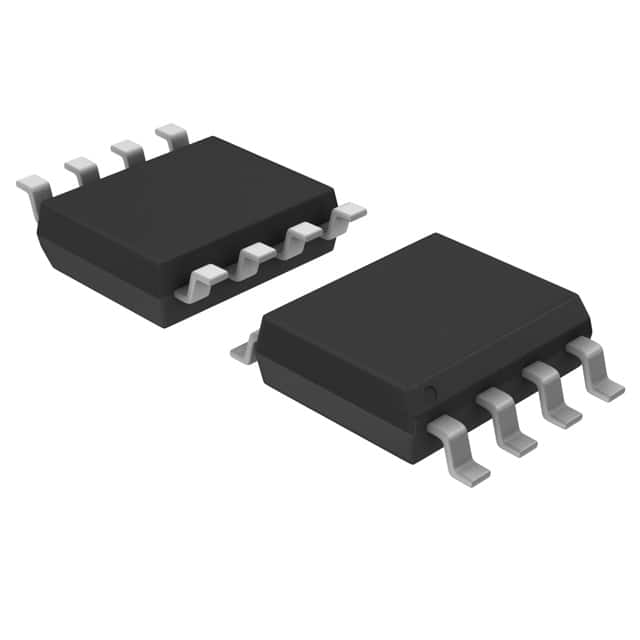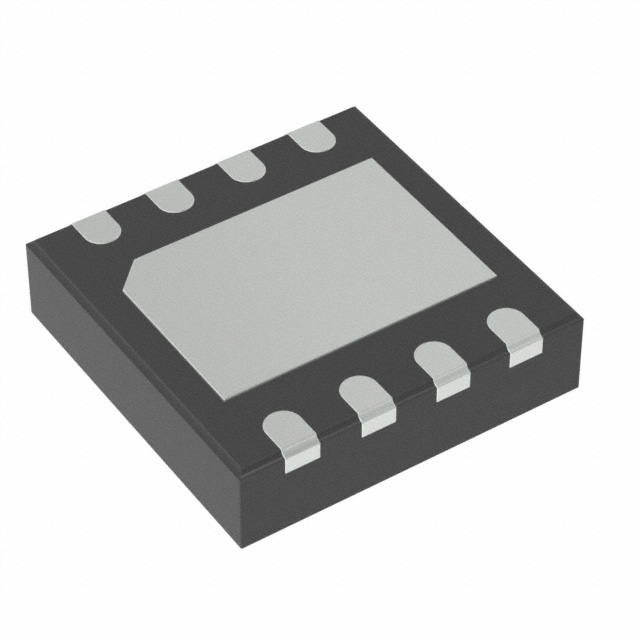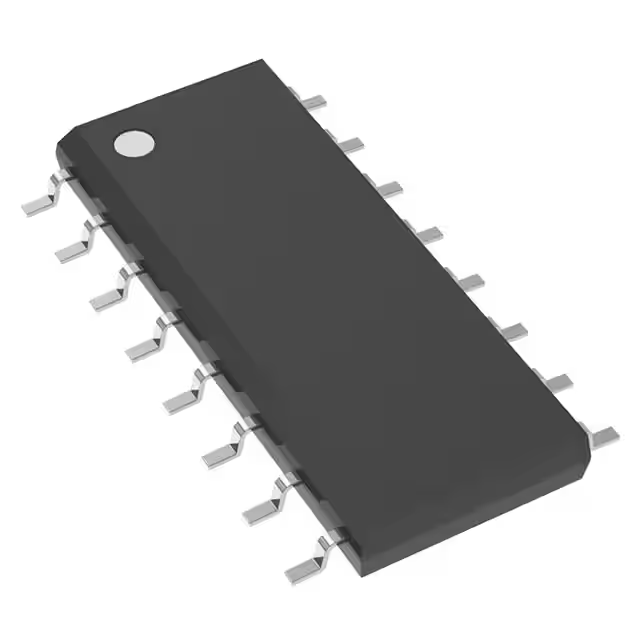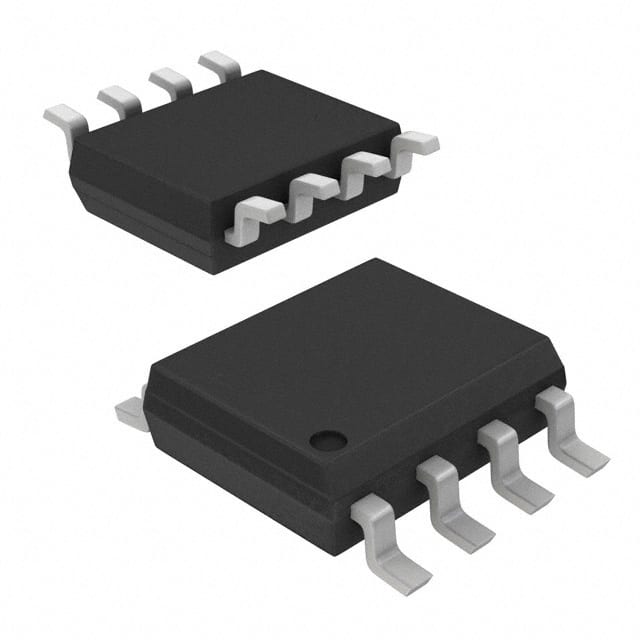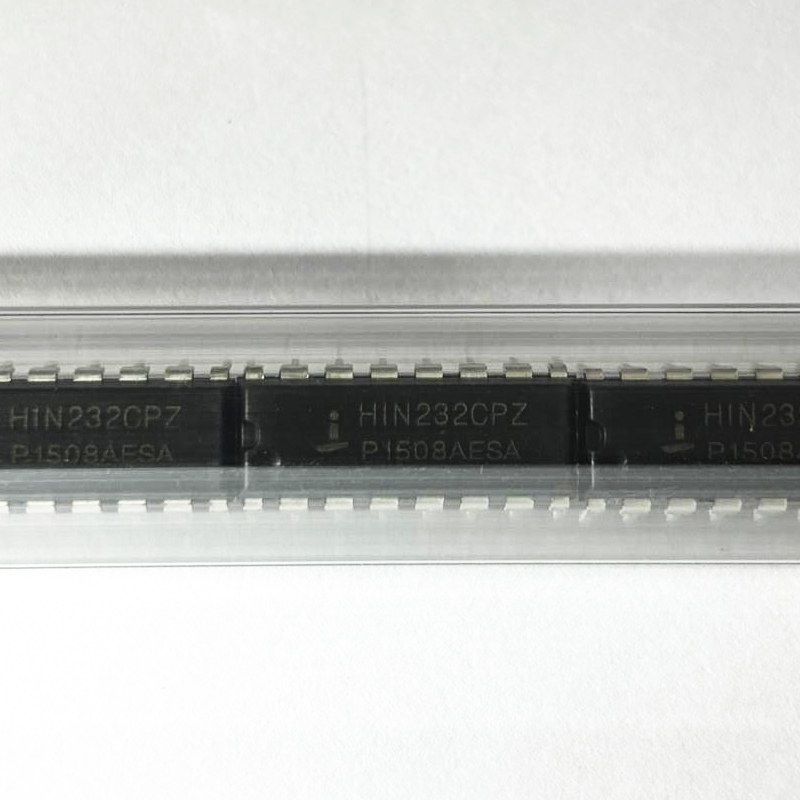
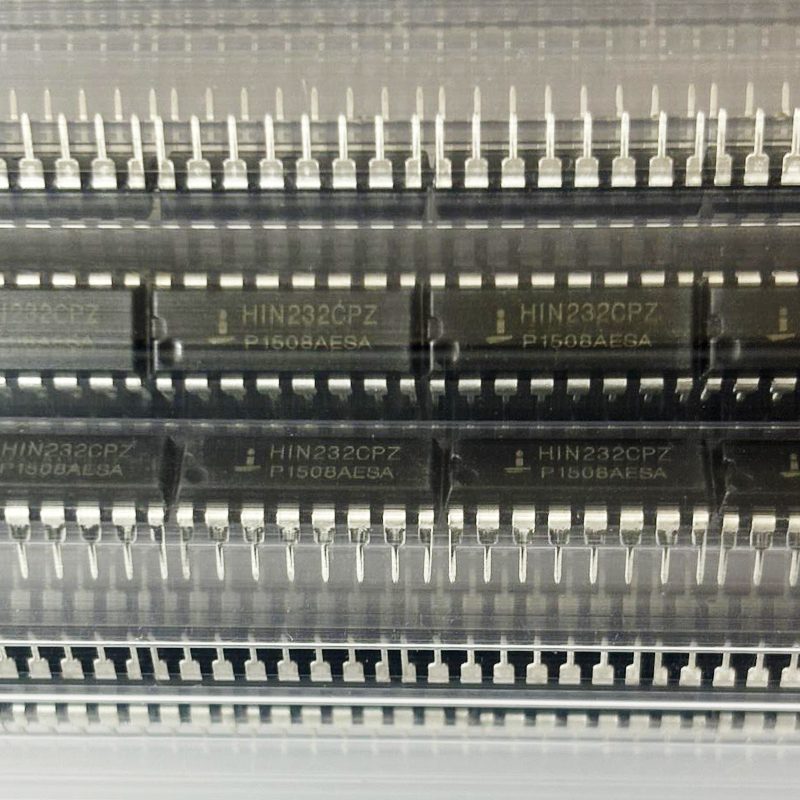
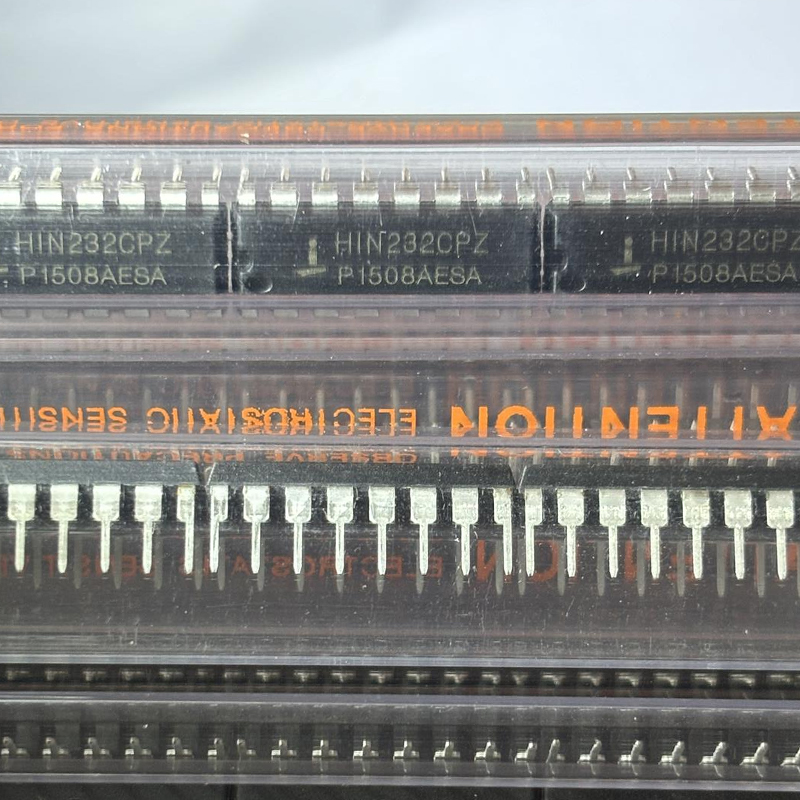


HIN232CPZ RS-232 Transceiver IC
Reliable +5V Dual RS-232 Transceiver IC for Industrial, Instrumentation and Embedded Applications
HIN232CPZ provides two RS-232 transmitters and two receivers with an integrated charge-pump voltage converter, allowing TTL/CMOS UART logic to communicate with standard RS-232 equipment from a single 4.5–5.5V supply.

The HIN232CPZ is a dual RS-232 transmitter and receiver IC designed to connect TTL/CMOS logic with standard RS-232 serial equipment. The device operates from a single 4.5 V to 5.5 V supply, integrates two transmitters and two receivers, includes onboard charge-pump voltage conversion and supports serial data rates up to 120 kbps. Its 16-pin PDIP package also makes the part useful for industrial repair, instrumentation, serviceable equipment, legacy embedded systems and products where a through-hole serial interface is still preferred.
What Makes HIN232CPZ Different from a UART Buffer?
A UART inside a microcontroller normally works with logic-level voltages. Depending on the controller, a logic high may be around 3.3 V or 5 V while a logic low is close to ground.
Classic RS-232 does not use the same electrical signaling. The cable side uses positive and negative line voltages, and its logical polarity is different from ordinary TTL/CMOS UART logic.
This means that connecting a microcontroller UART directly to a DB9 RS-232 connector is normally incorrect. The software protocol may be UART in both cases, but the electrical interface is different.
The HIN232CPZ acts as the physical-layer bridge between those two environments.
Its transmitter inputs accept logic-level data from a controller. The internal RS-232 line drivers then convert that data into bipolar serial signals suitable for the external cable.
In the reverse direction, the receiver section accepts RS-232 line voltages and converts them into TTL/CMOS-level outputs that can be processed by the digital controller.
This is especially important during troubleshooting. A serial interface may have the correct baud rate, parity, stop bits and packet format but still fail completely if the physical voltage levels are incorrect.
How Does the HIN232CPZ Charge Pump Work?
One of the most useful features of the HIN232 family is its onboard voltage doubler and inverter.
Traditional RS-232 circuits were often associated with positive and negative power rails. Creating those rails separately adds cost, board area and power-supply complexity.
HIN232CPZ avoids that requirement by using switched capacitors to generate the higher positive and negative voltages needed by the RS-232 drivers.
The device therefore allows a board with a single +5V supply to communicate with conventional RS-232 equipment without adding a separate ±12V supply subsystem.
The charge-pump network connects to C1+, C1−, C2+, C2−, V+ and V−.
HIN232CPZ product documentation commonly specifies a 1 µF charge-pump capacitance for this configuration. Some HIN232-family application circuits also show 0.1 µF or 1 µF capacitors, so the capacitor value should be confirmed against the datasheet supplied with the exact CHINA-brand device before production.
For an existing production design, follow the capacitor configuration specified by the exact datasheet revision and approved schematic rather than changing values only because another RS-232 transceiver uses smaller capacitors.
HIN232CPZ Key Specifications
| Parameter | HIN232CPZ Specification | Why It Matters |
|---|---|---|
| Device Type | Dual RS-232 transmitter / receiver | Provides two line drivers and two line receivers in one device. |
| Supply Voltage | 4.5 V to 5.5 V | Designed for systems with a nominal +5V rail. |
| Maximum Data Rate | 120 kbps | Covers common industrial and service-port serial speeds. |
| Transmitters | 2 | Provides two independent logic-to-RS-232 paths. |
| Receivers | 2 | Provides two independent RS-232-to-logic paths. |
| Charge Pump | Integrated voltage doubler / inverter | Generates RS-232 driver rails from a single +5V supply. |
| Charge-Pump Capacitance | 1 µF listed for HIN232CPZ | External capacitors support the onboard switched-capacitor converter. |
| Receiver Input Range | Up to ±30 V | Provides useful margin for conventional RS-232 line signals. |
| Receiver Input Impedance | 3 kΩ to 7 kΩ | Matches expected RS-232 receiver loading. |
| Receiver Hysteresis | 0.5 V | Improves noise rejection around the receiver threshold. |
| Maximum Driver Slew Rate | 30 V/µs | Controls edge speed on the external serial cable. |
| Temperature Range | 0°C to +70°C | Commercial operating-temperature range for HIN232CPZ. |
| Package | PDIP-16 | 16-lead through-hole package suitable for sockets and repairable equipment. |
| Package Dimensions | Approx. 19.0 × 6.6 × 3.94 mm | Useful for replacement, clearance and footprint checking. |
| Pin Pitch | 2.5 mm | Relevant when creating or checking the PCB footprint. |
| Interface Standard | RS-232E / V.28 compatible | Designed as a conventional RS-232 physical-layer interface. |
HIN232CPZ Pinout and Pin Functions
The HIN232CPZ uses a 16-lead PDIP package. The pinout is organized around the charge-pump network, two transmitter channels, two receiver channels, supply and ground.
Because this is a through-hole device, the top-view orientation is particularly important during replacement work. Pin 1 begins beside the package notch and numbering continues counterclockwise around the device.
| Pin | Pin Name | Description |
|---|---|---|
| 1 | C1+ | Positive connection for the first charge-pump capacitor. |
| 2 | V+ | Positive internally generated charge-pump supply. |
| 3 | C1− | Negative connection for the first charge-pump capacitor. |
| 4 | C2+ | Positive connection for the second charge-pump capacitor. |
| 5 | C2− | Negative connection for the second charge-pump capacitor. |
| 6 | V− | Negative internally generated charge-pump supply. |
| 7 | T2OUT | RS-232-level output from transmitter channel 2. |
| 8 | R2IN | RS-232-level input to receiver channel 2. |
| 9 | R2OUT | TTL/CMOS logic output from receiver channel 2. |
| 10 | T2IN | TTL/CMOS logic input to transmitter channel 2. |
| 11 | T1IN | TTL/CMOS logic input to transmitter channel 1. |
| 12 | R1OUT | TTL/CMOS logic output from receiver channel 1. |
| 13 | R1IN | RS-232-level input to receiver channel 1. |
| 14 | T1OUT | RS-232-level output from transmitter channel 1. |
| 15 | GND | Ground reference. |
| 16 | VCC | Positive supply input for the HIN232CPZ. |
Why Is a 120 kbps RS-232 Transceiver Still Useful?
A maximum data rate of 120 kbps looks slow when compared with Ethernet, USB or modern high-speed serial interfaces. However, those technologies solve different problems.
RS-232 remains useful because it is simple, deterministic, well understood and supported by an enormous installed base of industrial and laboratory equipment.
Many practical RS-232 interfaces operate at 9.6 kbps, 19.2 kbps, 38.4 kbps, 57.6 kbps or 115.2 kbps. The 120 kbps capability of HIN232CPZ therefore covers the standard baud rates commonly used by configuration ports, instrumentation and older communications equipment.
For an industrial service interface, reliability can be far more important than raw speed. A configuration port may send only a few commands and status messages each second, but it must work predictably when a technician connects to equipment years after installation.
This is one reason classic RS-232 interfaces continue to appear in PLCs, analyzers, diagnostic equipment, routers, test systems and specialized machines.
Where Is HIN232CPZ Used?
The HIN232 family is commonly used in computers, printers and terminals, instrumentation, modems and other systems that require an RS-232 communications port.
Those categories cover a surprisingly wide range of real-world equipment.
- Industrial service ports: PLCs, drives, HMIs and controllers often retain RS-232 for setup, diagnostics and field maintenance.
- Instrumentation: Meters, laboratory analyzers, data loggers and test fixtures often use stable serial command sets for many years.
- Embedded controllers: HIN232CPZ can translate a compatible UART interface into standard RS-232 electrical levels.
- Modems and communication equipment: Configuration or management interfaces may use RS-232 even when the main communication path uses Ethernet or wireless networking.
- Printers and terminals: Legacy peripherals remain in use in factories, warehouses and specialized commercial equipment.
- Repairable industrial systems: The PDIP package can be socketed and replaced without fine-pitch surface-mount rework.
Can HIN232CPZ Be Used with a Modern Microcontroller?
It can, but voltage compatibility should be checked first.
The fact that both devices use UART communication does not automatically mean their logic voltages are compatible. HIN232CPZ is fundamentally a +5V transceiver, while many modern microcontrollers operate at 3.3V or lower.
The designer should therefore check whether the MCU can drive the HIN232CPZ transmitter inputs reliably and whether the MCU input pins can tolerate the voltage presented by the HIN232CPZ receiver outputs.
A controller that is not 5V tolerant should not be connected blindly just because the protocol is correct.
For an existing 5V board, HIN232CPZ can be a natural fit. For a completely new 3.3V design, a newer low-voltage RS-232 transceiver may reduce the need for additional level translation.
HIN232CPZ PCB Layout Tips
The paths around C1+, C1−, C2+, C2−, V+ and V− carry switched charge-pump current. Short connections reduce parasitic resistance and inductance.
Place the supply bypass capacitor close to VCC and use a short ground-return path.
RS-232 connector traces can receive noise and external transients from the cable. Avoid running them directly beside sensitive analog, clock or reset signals when possible.
Internal transceiver robustness does not automatically replace system-level connector protection. Equipment connected to long external cables may benefit from TVS protection and good grounding.
Many apparently defective RS-232 links are actually caused by incorrect TX/RX crossing, null-modem wiring or connector pin assignments.
How to Troubleshoot a HIN232CPZ RS-232 Interface
A useful troubleshooting method is to divide the serial interface into three sections: the logic side, the HIN232CPZ itself and the external RS-232 cable.
1. Check the UART input
Measure T1IN or T2IN and confirm that the microcontroller is transmitting the expected digital UART waveform.
If there is no signal here, the problem is probably in firmware, UART configuration or the controller rather than the RS-232 transceiver.
2. Check the RS-232 transmitter output
Measure T1OUT or T2OUT.
A healthy transceiver should convert the logic-level UART signal into a bipolar RS-232 waveform.
If the logic input is correct but the output voltage is weak, inspect V+, V− and the charge-pump capacitors.
3. Check the incoming RS-232 signal
If the remote device is transmitting, measure R1IN or R2IN and confirm that an RS-232 waveform reaches the IC.
4. Check the receiver logic output
Measure R1OUT or R2OUT.
If the RS-232 input looks valid but no logic output appears, investigate the receiver channel, power supply or possible device damage.
5. Check software only after the electrical path
Once the physical signals are confirmed, verify baud rate, data bits, parity, stop bits and any hardware handshake requirements.
This systematic approach is usually faster than randomly replacing components.
HIN232CPZ vs MAX232-Type RS-232 Transceivers
HIN232CPZ is often discussed in the same general category as MAX232-style devices because both provide a single-supply charge-pump architecture for translating logic-level UART signals into RS-232 signals.
However, "same function" does not automatically mean "drop-in replacement."
Before replacing HIN232CPZ with another RS-232 transceiver, compare the exact pinout, supply range, number of drivers and receivers, required charge-pump capacitors, data rate, logic thresholds, package dimensions, operating temperature and lifecycle status.
A replacement IC can physically fit a 16-pin socket yet still behave differently if the surrounding capacitor network or voltage assumptions are not compatible.
For new products, the best alternative may also depend on the controller voltage.
A modern 3.3V transceiver can make more sense in a new low-voltage design, while HIN232CPZ is particularly useful when maintaining a known +5V RS-232 architecture.
Why Can the DIP-16 Package Still Be Useful?
Surface-mount packages dominate modern high-volume electronics because they save PCB area and support automated assembly.
That does not make a PDIP package useless.
Industrial, laboratory and educational systems can have a very different lifecycle from a smartphone or consumer gadget.
A machine may remain in service for fifteen or twenty years. In that situation, repairability can be more important than saving several square millimeters of board space.
A socketed HIN232CPZ can be replaced using basic tools. Its pins can also be probed easily during development and field repair.
For prototypes, test fixtures, legacy boards, training equipment and low-volume industrial controllers, those advantages can still be meaningful.
What Should Buyers Check Before Ordering HIN232CPZ?
Component purchasing should begin with the exact part number rather than only the generic description "RS-232 transceiver."
This page presents the HIN232CPZ as a CHINA-brand sourcing option in a commercial-temperature, through-hole PDIP-16 configuration. Buyers should confirm the exact marking, package, electrical specification and supplier datasheet for the production lot being purchased.
Before purchasing, verify the package marking, manufacturer traceability, supplier reputation, date/lot information and storage condition.
This is especially important for parts used in older equipment because authorized inventory and older broker stock may appear together in the market.
Also confirm the temperature grade. The HIN232CPZ commercial option is specified for 0°C to +70°C.
A part can fit the socket correctly yet still be the wrong choice if the final equipment must operate outside that temperature range.
HIN232CPZ FAQ
What is HIN232CPZ used for?
Is HIN232CPZ an RS-232 driver or receiver?
What supply voltage does HIN232CPZ require?
What is the maximum HIN232CPZ data rate?
How many transmitters and receivers does HIN232CPZ have?
Does HIN232CPZ need a negative external power supply?
What capacitor value does HIN232CPZ use?
What package does HIN232CPZ use?
What is the HIN232CPZ operating temperature range?
Can HIN232CPZ connect directly to a 3.3V MCU?
Is the CHINA HIN232CPZ available for sourcing?
Final Engineering Perspective
The HIN232CPZ RS-232 transceiver IC is not a complicated component, and that simplicity is one of its strongest advantages.
It solves a clear electrical problem: converting ordinary TTL/CMOS UART data into RS-232 signals and translating incoming RS-232 voltages back into logic that a digital controller can understand.
Its most important characteristics are the 4.5 V to 5.5 V supply range, two transmitters, two receivers, integrated charge pump, 120 kbps maximum data rate and 16-lead PDIP package.
These characteristics make HIN232CPZ particularly useful in established +5V platforms, industrial service ports, instrumentation, communication equipment and repairable legacy systems.
For a new design, engineers should evaluate the complete system rather than selecting the component only because the product requires "RS-232."
Check the controller voltage, charge-pump capacitor network, PCB layout, cable environment, connector protection, DTE/DCE wiring, required operating temperature and long-term sourcing strategy.
When these details are handled correctly, the HIN232CPZ provides a predictable and easy-to-debug bridge between embedded digital logic and conventional RS-232 equipment.