Purge Valve Explained: Symptoms, Testing, Location, and Replacement Guide
Contents
- What Is a Purge Valve and What Does It Do?
- Common Purge Valve Symptoms
- How to Test a Purge Valve
- Purge Valve Location
- Purge Valve vs EVAP Vent Solenoid
- Ford Escape and Ford Edge Purge Valve
- Chevy Traverse Purge Valve Replacement
- Why Does a Purge Valve Fail?
- What Happens If the Purge Valve Is Stuck Open?
- How to Choose the Correct Purge Valve
- Is an Air Dryer Purge Valve the Same Thing?
- Purge Valve FAQ
- Final Thoughts
What Is a Purge Valve and What Does It Do?
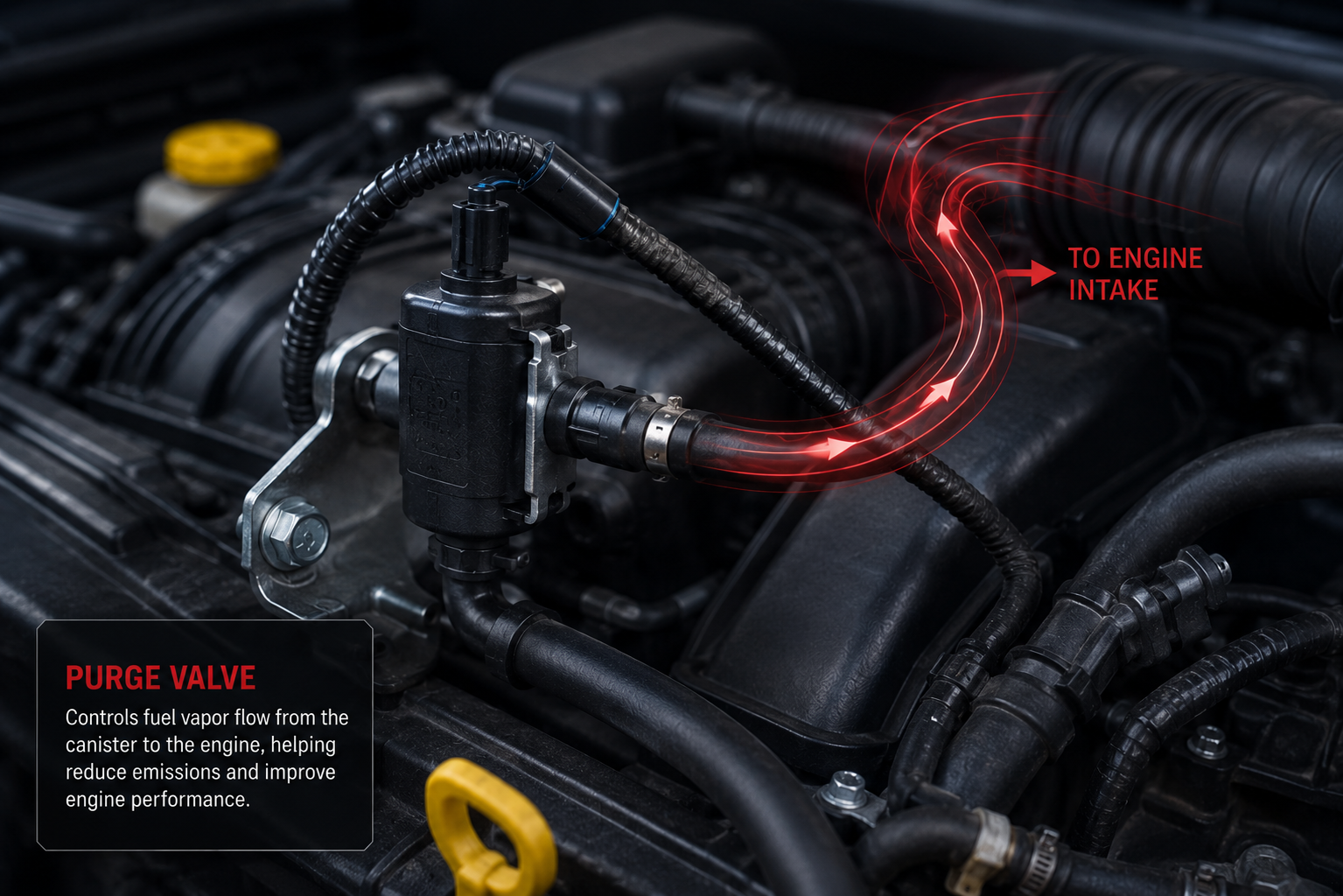
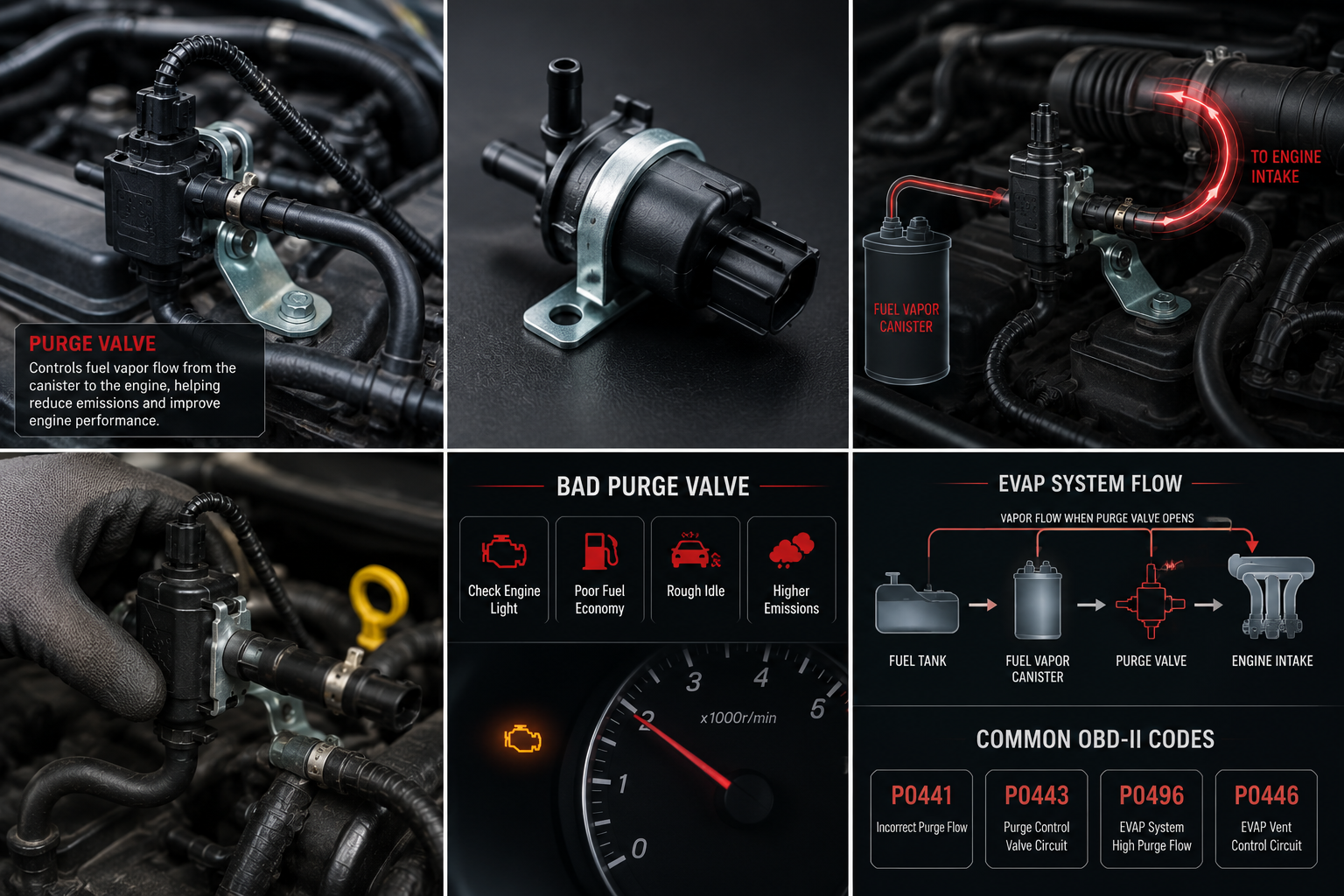
A purge valve is an important part of a vehicle's EVAP system. Its job is to control fuel vapor stored inside the charcoal canister and send it to the engine when conditions are right. Instead of allowing gasoline vapor to escape into the atmosphere, the system burns it during normal engine operation.
The component may also be called a canister purge valve, vapor canister purge valve, EVAP purge valve, purge valve solenoid, or EVAP purge solenoid. Although it is a small part, a bad purge valve can cause a check-engine light, rough idle, hard starting after refueling, EVAP fault codes, and other drivability problems.
What Is a Purge Valve and What Does It Do?
If you are asking what is a purge valve or what does a purge valve do, the basic answer is simple. The valve controls the flow of fuel vapor between the charcoal canister and the engine intake.
When the vehicle is parked, fuel vapor is captured inside the charcoal canister. Once the engine is running under suitable conditions, the engine control module activates the EVAP purge valve. Engine vacuum then pulls the stored vapor into the intake manifold, where it is burned with the normal air-fuel mixture.
A correctly working purge valve helps reduce hydrocarbon emissions, improves EVAP system control, and prevents unwanted vapor from entering the engine at the wrong time.
Common Purge Valve Symptoms
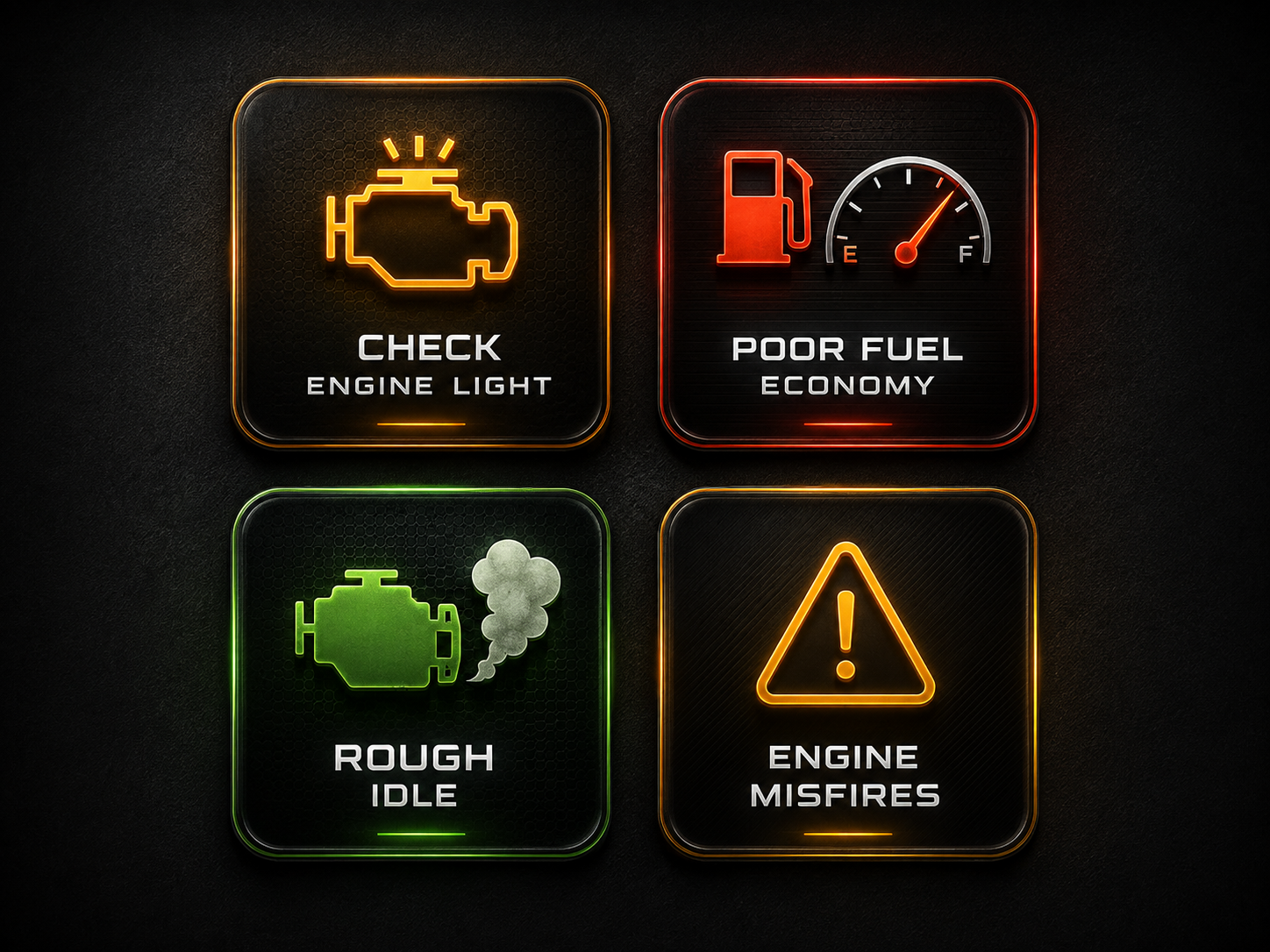
Canister purge valve symptoms depend on whether the valve is stuck open, stuck closed, leaking, or experiencing an electrical problem.
- Check-engine light: EVAP-related fault codes are one of the most common warning signs.
- Rough idle: A leaking valve can allow unwanted air and fuel vapor into the intake.
- Hard starting after refueling: Excess fuel vapor may enter the engine when the purge valve fails to close properly.
- Long cranking: A stuck-open valve may temporarily create an overly rich mixture.
- Engine hesitation: Incorrect vapor flow can disturb normal fuel control.
- Failed emissions test: EVAP system faults can prevent readiness monitors from completing.
Hard starting immediately after filling the fuel tank is especially useful as a diagnostic clue. A leaking vapor canister purge valve may allow too much vapor into the intake during startup.
How to Test a Purge Valve
Understanding how to test a purge valve can help prevent unnecessary parts replacement. An EVAP fault does not always mean the purge valve itself is bad.
1. Read Diagnostic Trouble Codes
Use an OBD-II scan tool to check stored and pending trouble codes. EVAP codes can provide useful information about purge flow, leaks, electrical faults, or general system performance.
2. Inspect the Hoses and Connector
Check the vapor hoses, quick-connect fittings, electrical connector, and wiring around the purge valve solenoid. Cracked hoses or damaged wiring can create symptoms similar to a failed valve.
3. Check Whether the Valve Seals
Many purge valves are normally closed when they are not energized. If the valve allows airflow when it should be closed, the internal seal may be leaking.
4. Test the Solenoid
A multimeter can be used to check the electrical coil when the correct manufacturer specification is available. A professional scan tool may also activate the EVAP purge solenoid while engine data is monitored.
If an EVAP leak is still suspected, a smoke test can help locate damaged hoses, fittings, canister leaks, or problems with the EVAP vent solenoid.
Purge Valve Location
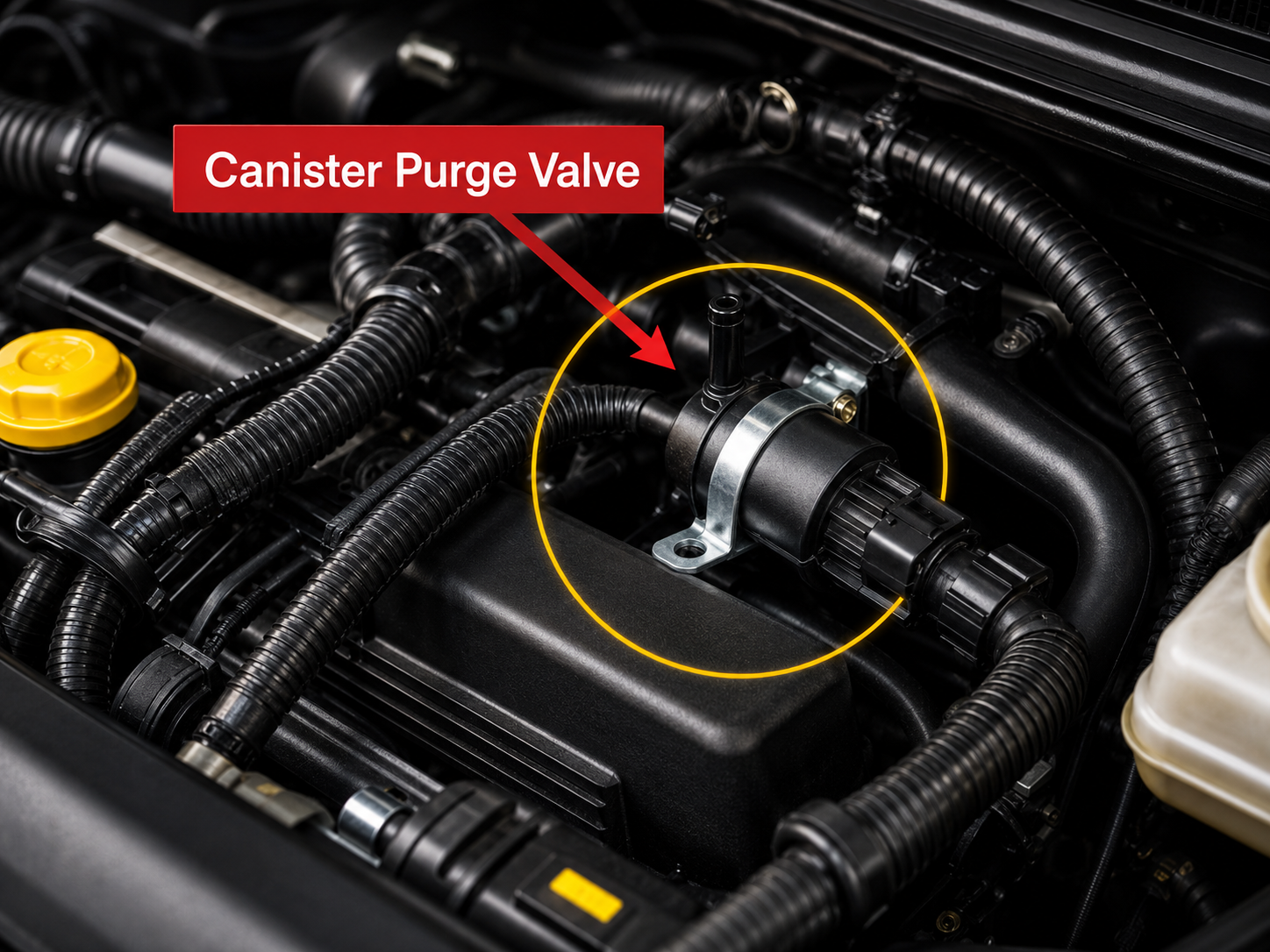
Purge valve location varies between vehicles, but it is commonly found inside the engine compartment near the intake manifold, throttle body, or an EVAP vapor line.
When searching for EVAP canister purge valve location or even common search variations such as purge valve locati0n, always check the exact vehicle year and engine. The same vehicle model can use different EVAP layouts across different generations.
The purge valve should also not be confused with the EVAP vent valve. The purge valve is normally located closer to the engine, while the vapor canister vent solenoid is usually located near the charcoal canister or fuel tank.
Purge Valve vs EVAP Vent Solenoid
| Component | Main Function | Typical Location |
|---|---|---|
| Purge Valve | Controls vapor flow to the engine | Engine bay / intake area |
| EVAP Vent Solenoid | Controls fresh air and seals the EVAP system | Near charcoal canister / fuel tank |
This difference is important when diagnosing EVAP problems. A bad EVAP vent valve can trigger fault codes that may be confused with a purge valve problem.
Ford Escape and Ford Edge Purge Valve
Searches for purge valve Ford Escape and Ford Edge purge valve replacement are common because starting problems, EVAP fault codes, and rough idle can lead owners to inspect the purge system.
Before ordering a replacement, verify the model year, engine size, electrical connector, hose arrangement, and OEM part number. Different Ford Escape and Ford Edge engines may use different purge valve assemblies.
Chevy Traverse Purge Valve Replacement
A Chevy Traverse EVAP purge valve performs the same basic job of controlling fuel vapor flow from the charcoal canister to the engine.
When performing a Chevy Traverse purge valve replacement, confirm that the valve is actually responsible for the fault. A damaged vapor hose, faulty vent solenoid, charcoal canister problem, or electrical issue can produce similar EVAP symptoms.
Replacement products may also be listed as an ACDelco GM Genuine Parts evaporative emission canister purge solenoid valve. Always confirm compatibility using the exact model year, engine, VIN, and original part number.
Why Does a Purge Valve Fail?
A purge valve operates thousands of times during normal vehicle use. Heat, age, contamination, and electrical wear can eventually cause failure.
- Internal valve sticking
- Worn seals
- Electrical coil failure
- Damaged wiring or connectors
- Fuel-vapor contamination
- Charcoal particles from a damaged canister
- Cracked EVAP hoses
This is why replacing the valve alone may not always solve the problem. The complete EVAP system should be inspected when symptoms or trouble codes remain after replacement.
What Happens If the Purge Valve Is Stuck Open?
A stuck-open canister purge valve can continuously allow fuel vapor and additional air into the intake manifold. This may cause rough idle, long cranking, hesitation, abnormal fuel trims, or difficult starting after refueling.
A stuck-closed valve creates a different problem. Stored fuel vapor cannot be purged correctly from the charcoal canister, which may trigger EVAP performance or purge-flow fault codes even when the engine appears to run normally.
How to Choose the Correct Purge Valve
Before buying a replacement purge valve, check:
- Vehicle year and model
- Engine displacement
- VIN compatibility
- OEM or cross-reference part number
- Electrical connector shape
- Hose and port size
- Port orientation
Matching only the vehicle model name is not always enough because manufacturers may use several purge valve designs within the same model range.
Is an Air Dryer Purge Valve the Same Thing?
No. An air dryer purge valve is used in compressed-air systems, especially heavy-duty vehicle air-brake systems. It releases moisture and contaminants from the air dryer.
An automotive EVAP purge valve, by comparison, controls gasoline vapor. The two components share the word "purge" but perform completely different jobs.
Purge Valve FAQ
What does a purge valve do?
It controls fuel vapor flow from the charcoal canister to the engine so the vapor can be burned instead of released into the atmosphere.
What are common purge valve symptoms?
Common signs include a check-engine light, rough idle, hard starting after refueling, long cranking, hesitation, and EVAP trouble codes.
Where is the purge valve located?
It is commonly located inside the engine compartment near the intake manifold or EVAP vapor line. Exact location depends on the vehicle and engine.
Is the EVAP purge valve the same as the vent valve?
No. The purge valve controls vapor moving toward the engine, while the EVAP vent solenoid manages airflow near the charcoal canister and helps seal the EVAP system during testing.
Should I replace a purge valve whenever I get an EVAP code?
No. EVAP codes can also come from leaking hoses, a faulty vent valve, charcoal canister problems, wiring faults, sensors, or other system leaks. Testing before replacement is the better approach.
Final Thoughts
The purge valve is a small but important part of the EVAP system. A healthy valve controls fuel vapor accurately, reduces emissions, and helps the engine maintain stable operation.
If you experience rough idle, hard starting after refueling, a check-engine light, or EVAP fault codes, inspect and test the canister purge valve before replacing it. Understanding the difference between the EVAP purge valve, purge valve solenoid, and EVAP vent solenoid can also help avoid unnecessary repairs and make diagnosis faster and more accurate.